Grounding Into Autumn: Jasmine Hemsley on Ayurveda’s Guide to Seasonal Shifts
As the light fades and the air becomes dryer, autumn’s Vata energy can leave us restless, depleted and ungrounded. Wellbeing expert and Ayurveda enthusiast Jasmine Hemsley shares how to soften into the season with nourishing rituals, mindful movement and daily practices that bring balance back to body and mind.
JOIN THE RITUAL. SIGN UP FOR EXCLUSIVE CONTENT, EXPERT INSIGHTS,
RITUALS, STORIES, NEW LAUNCHES & EXPERIENCES

Every year, as summer slips into autumn, I notice the shift not only in the trees and the skies but also within myself. The light changes, the days shorten and with it comes a very particular energy – one that Ayurveda describes as Vata, so Autumn is known as Vata season. Vata is the dosha of air and ether: light, quick, irregular, dry, constantly moving. It’s creative, full of ideas and inspiration, but it can also leave us feeling anxious, ungrounded and restless if left unchecked.
Modern life already amplifies Vata (one of the three doshas or psychic energies that make up our mind-bodies and the world around us): bright flashing lights, constant scrolling, endless stimulation, rushing from one thing to the next. Unlike our ancestors, who might have visited the next village once a week or written letters with days between replies, we now live in a whirlwind of instant messages, podcasts, newsfeeds and global contact. No wonder our minds feel overstimulated.
This is why autumn is such an important season to acknowledge, as the natural environment at this time brings an increased influence of Vata which only stirs things up even more and aggravates that wired feeling. Without understanding what’s happening, we can suddenly feel low, depleted or unable to sleep. I can count on two hands the number of people who are already telling me that their sleep has been affected this past week.
Ayurveda reminds us that we can balance this airy, fast-moving energy with grounding rituals. By aligning with the rhythms of nature – what Ayurveda calls rituacharya, or seasonal living – we can navigate this transition with greater ease. Simple adjustments make all the difference. For example, I notice the dryness of the season not only in my skin but also in digestion and mood. That’s my cue to slow down, to soothe with oils (sneha, in Sanskrit which translates to “love”), and to return to foods and practices that root me.
One of my favourite rituals is abhyanga – a daily self-massage with warm oil. In autumn, sesame or almond oil are especially supportive, deeply nourishing the skin and calming the nervous system. The act of massage itself is grounding – soothing the nerve endings in the skin, enhancing circulation, releasing tension and promoting a sense of stability. Unlike water-based lotions, oils penetrate more deeply, protect and lock in moisture – something we need during this dry time of year. Their heavier qualities also help to counter the lightness and flightiness that Vata season can bring.

“Ayurveda reminds us that we can balance this airy, fast-moving energy with grounding rituals.”
“Ayurveda reminds us that we can balance this airy, fast-moving energy with grounding rituals.”
Equally important is adjusting our sleeping and waking times to follow the sun, helping to balance our circadian rhythm. As the days grow shorter, I make a conscious effort to wind down earlier, allowing my body to rest in step with the natural rhythm of the season. I start the day with warm water, sipped slowly rather than flooding my stomach, to gently hydrate without wiping out my digestive fire, and avoid cold drinks throughout. And in my kitchen, it’s time to get the slow cooker out and amp up the soups, dals, porridges and roasted squashes, using plenty of fats and oils such as ghee and extra virgin olive oil to nourish from the inside out while avoiding raw and cold foods like salads and smoothies which are harder on digestion. Stewed apples and pears – fruits of the season – are not only delicious but grounding and supportive for digestion. Gentle spices like cinnamon, cardamom, cumin, fennel and ginger help stoke the digestive fire without overstimulating it.

I also think of this time as a spiritual reset. Across cultures, autumn has long been marked by rituals of reflection and preparation. The Hindu festival of Navratri, nine sacred days dedicated to the divine feminine, falls at this time of year, (as well as during another huge transition in March; marking the transition from dark to light, winter to spring). It’s a season of cleansing, simplifying diets and slowing down. In the Celtic tradition, Mabon and the autumn equinox also signal a time to give thanks for the harvest and prepare for the darker months ahead.
Our modern rituals can echo these ancient practices: clearing out clutter, taking time for breathwork, grounding barefoot on the earth, soaking up sunshine before winter, or simply creating more space in the day for slowness. For me, someone who is not naturally organised and can lose focus, waking early to write or re-adjust a to-do list in the quiet before the children have woken up helps me walk through the day with a bit more grace – instead of multitasking frantically, I try to “walk as though in a ball gown,” as I like to remind myself, moving through tasks with presence.
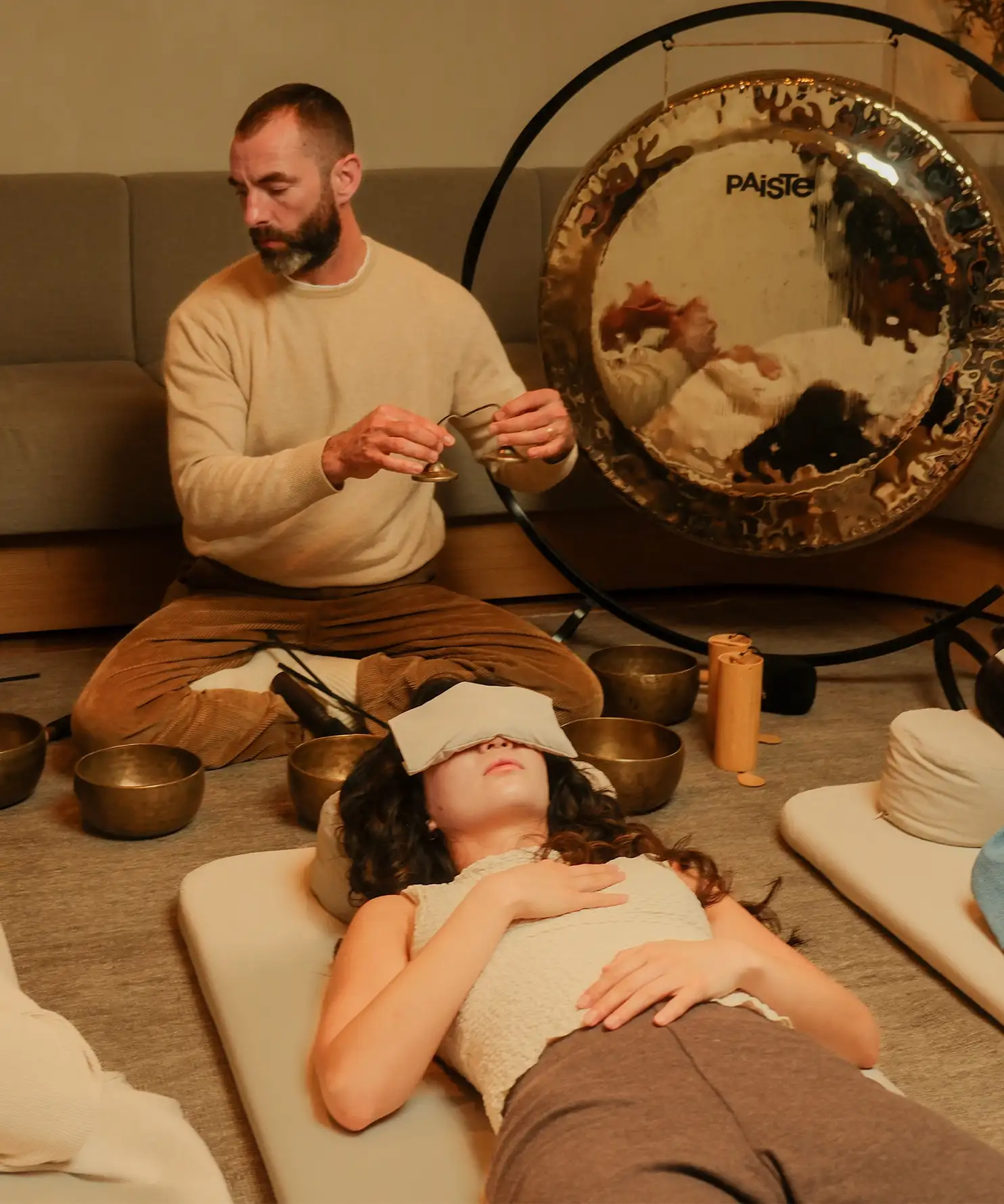
Meditation is another powerful ally at this time of year – ideally twice a day. Just 20 minutes of meditation can feel as restorative as three hours of sleep, acting as an active rest for both mind and body. The first meditation clears away the mental debris of the day: the bad news headlines, the emotional weight of conversations, the little stresses we hold in without even noticing. The second helps us process the residue of the day before, keeping us from carrying yesterday’s burdens into tomorrow. A continuous twice-a-day practice means you can really start moving through historical stuff. In this way, meditation keeps the mind clear and the energy steady. I like to use my digital sound bath recordings like FOCUS as a background to working or SLEEP before I go to bed. Even a simple alternate nostril breathing practice can rebalance the mind-body, soothe the nervous system, lower blood pressure and slow your heartbeat when Vata is high.
“Autumn equinox signals a time to give thanks for the harvest and prepare for the darker months ahead.”
“Autumn equinox signals a time to give thanks for the harvest and prepare for the darker months ahead.”
And then there’s movement. In autumn, I steer clear of strenuous exercise that can be depleting – spin classes and high-intensity workouts can whip up even more Vata energy. Vata is easily aggravated by overexertion and excess movement especially if you have a Vata constitution. Instead, I lean into grounding, stabilising practices: restorative or Yin yoga, slow Hatha, gentle walking and hiking in nature. Ayurveda suggests working at about 50% of capacity – just enough to feel invigorated, but never to the point of exhaustion or heavy sweating. Moving more slowly, with breath awareness, saves energy and sustains vitality for the colder months ahead.
Finally, I remind myself that autumn is a season to soften. To choose comfort foods over extremes, to limit stimulants like caffeine, carbonated drinks and alcohol, and to give myself permission to go slower. Ayurveda teaches that by honouring the qualities of the season, we strengthen immunity, protect our energy and enter winter more resilient.
So, as the leaves fall and the nights draw in, I welcome this invitation: to slow down, to nourish deeply, and to find stability in the beautiful, inevitable turning of the year.

Every year, as summer slips into autumn, I notice the shift not only in the trees and the skies but also within myself. The light changes, the days shorten and with it comes a very particular energy – one that Ayurveda describes as Vata, so Autumn is known as Vata season. Vata is the dosha of air and ether: light, quick, irregular, dry, constantly moving. It’s creative, full of ideas and inspiration, but it can also leave us feeling anxious, ungrounded and restless if left unchecked.
Modern life already amplifies Vata (one of the three doshas or psychic energies that make up our mind-bodies and the world around us): bright flashing lights, constant scrolling, endless stimulation, rushing from one thing to the next. Unlike our ancestors, who might have visited the next village once a week or written letters with days between replies, we now live in a whirlwind of instant messages, podcasts, newsfeeds and global contact. No wonder our minds feel overstimulated.
This is why autumn is such an important season to acknowledge, as the natural environment at this time brings an increased influence of Vata which only stirs things up even more and aggravates that wired feeling. Without understanding what’s happening, we can suddenly feel low, depleted or unable to sleep. I can count on two hands the number of people who are already telling me that their sleep has been affected this past week.
Ayurveda reminds us that we can balance this airy, fast-moving energy with grounding rituals. By aligning with the rhythms of nature – what Ayurveda calls rituacharya, or seasonal living – we can navigate this transition with greater ease. Simple adjustments make all the difference. For example, I notice the dryness of the season not only in my skin but also in digestion and mood. That’s my cue to slow down, to soothe with oils (sneha, in Sanskrit which translates to “love”), and to return to foods and practices that root me.
One of my favourite rituals is abhyanga – a daily self-massage with warm oil. In autumn, sesame or almond oil are especially supportive, deeply nourishing the skin and calming the nervous system. The act of massage itself is grounding – soothing the nerve endings in the skin, enhancing circulation, releasing tension and promoting a sense of stability. Unlike water-based lotions, oils penetrate more deeply, protect and lock in moisture – something we need during this dry time of year. Their heavier qualities also help to counter the lightness and flightiness that Vata season can bring.
“Ayurveda reminds us that we can balance this airy, fast-moving energy with grounding rituals.”
“Ayurveda reminds us that we can balance this airy, fast-moving energy with grounding rituals.”
Equally important is adjusting our sleeping and waking times to follow the sun, helping to balance our circadian rhythm. As the days grow shorter, I make a conscious effort to wind down earlier, allowing my body to rest in step with the natural rhythm of the season. I start the day with warm water, sipped slowly rather than flooding my stomach, to gently hydrate without wiping out my digestive fire, and avoid cold drinks throughout. And in my kitchen, it’s time to get the slow cooker out and amp up the soups, dals, porridges and roasted squashes, using plenty of fats and oils such as ghee and extra virgin olive oil to nourish from the inside out while avoiding raw and cold foods like salads and smoothies which are harder on digestion. Stewed apples and pears – fruits of the season – are not only delicious but grounding and supportive for digestion. Gentle spices like cinnamon, cardamom, cumin, fennel and ginger help stoke the digestive fire without overstimulating it.
I also think of this time as a spiritual reset. Across cultures, autumn has long been marked by rituals of reflection and preparation. The Hindu festival of Navratri, nine sacred days dedicated to the divine feminine, falls at this time of year, (as well as during another huge transition in March; marking the transition from dark to light, winter to spring). It’s a season of cleansing, simplifying diets and slowing down. In the Celtic tradition, Mabon and the autumn equinox also signal a time to give thanks for the harvest and prepare for the darker months ahead.
Our modern rituals can echo these ancient practices: clearing out clutter, taking time for breathwork, grounding barefoot on the earth, soaking up sunshine before winter, or simply creating more space in the day for slowness. For me, someone who is not naturally organised and can lose focus, waking early to write or re-adjust a to-do list in the quiet before the children have woken up helps me walk through the day with a bit more grace – instead of multitasking frantically, I try to “walk as though in a ball gown,” as I like to remind myself, moving through tasks with presence.
Meditation is another powerful ally at this time of year – ideally twice a day. Just 20 minutes of meditation can feel as restorative as three hours of sleep, acting as an active rest for both mind and body. The first meditation clears away the mental debris of the day: the bad news headlines, the emotional weight of conversations, the little stresses we hold in without even noticing. The second helps us process the residue of the day before, keeping us from carrying yesterday’s burdens into tomorrow. A continuous twice-a-day practice means you can really start moving through historical stuff. In this way, meditation keeps the mind clear and the energy steady. I like to use my digital sound bath recordings like FOCUS as a background to working or SLEEP before I go to bed. Even a simple alternate nostril breathing practice can rebalance the mind-body, soothe the nervous system, lower blood pressure and slow your heartbeat when Vata is high.
“Autumn equinox signals a time to give thanks for the harvest and prepare for the darker months ahead.”
“Autumn equinox signals a time to give thanks for the harvest and prepare for the darker months ahead.”
And then there’s movement. In autumn, I steer clear of strenuous exercise that can be depleting – spin classes and high-intensity workouts can whip up even more Vata energy. Vata is easily aggravated by overexertion and excess movement especially if you have a Vata constitution. Instead, I lean into grounding, stabilising practices: restorative or Yin yoga, slow Hatha, gentle walking and hiking in nature. Ayurveda suggests working at about 50% of capacity – just enough to feel invigorated, but never to the point of exhaustion or heavy sweating. Moving more slowly, with breath awareness, saves energy and sustains vitality for the colder months ahead.
Finally, I remind myself that autumn is a season to soften. To choose comfort foods over extremes, to limit stimulants like caffeine, carbonated drinks and alcohol, and to give myself permission to go slower. Ayurveda teaches that by honouring the qualities of the season, we strengthen immunity, protect our energy and enter winter more resilient.
So, as the leaves fall and the nights draw in, I welcome this invitation: to slow down, to nourish deeply, and to find stability in the beautiful, inevitable turning of the year.
DON’T MISS