
“The Power is in the Pause”: Stepping into Your Authenticity with Kelly Weekers
The Dutch psychologist, podcaster and bestselling author believes the core rules of a meaningful life are surprisingly straightforward. The real challenge is learning how to live by them.
JOIN THE RITUAL. SIGN UP FOR EXCLUSIVE CONTENT, EXPERT INSIGHTS,
RITUALS, STORIES, NEW LAUNCHES & EXPERIENCES

by Maya Boyd
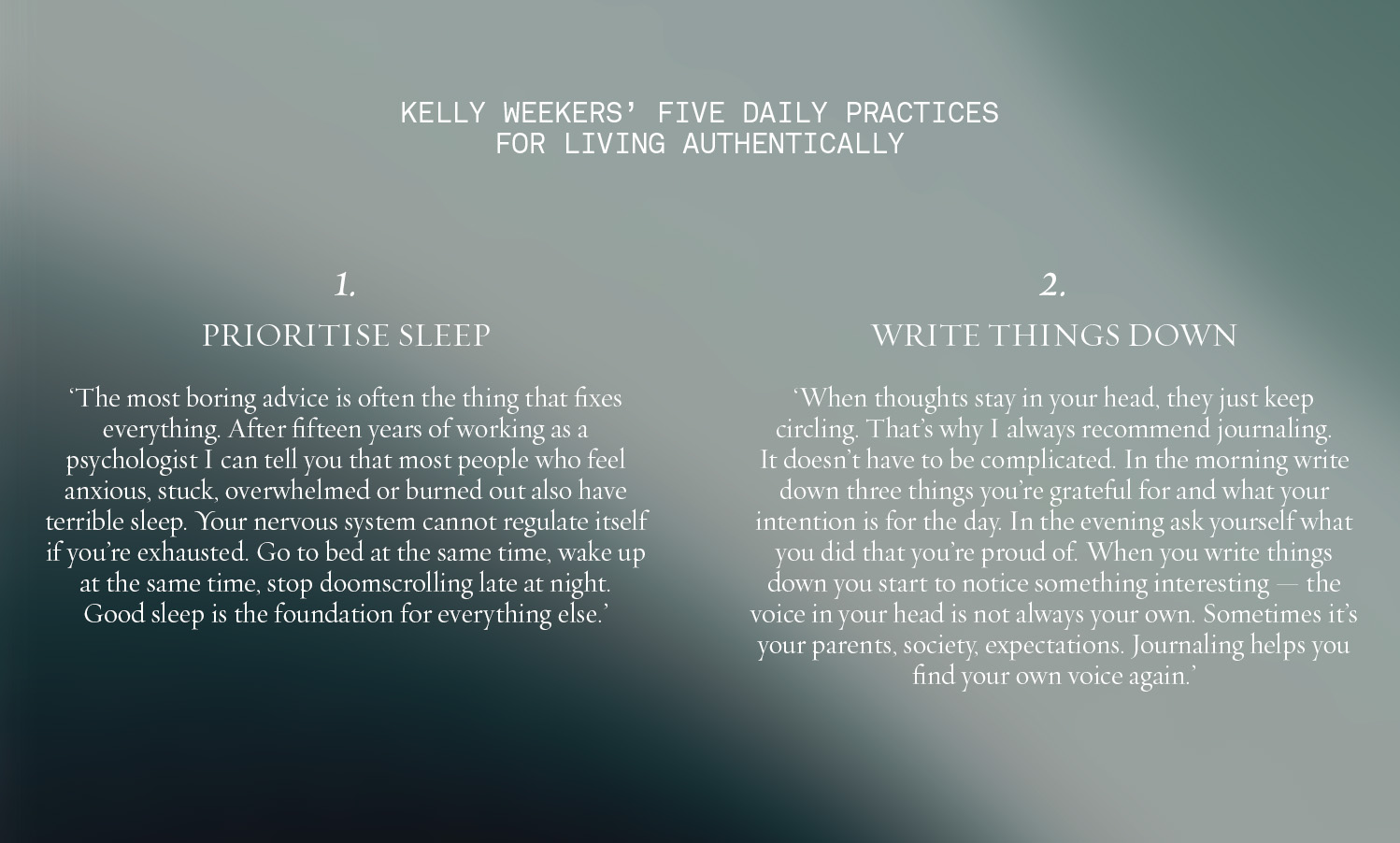
“I always say things are simple,” says Kelly Weekers, “But that doesn’t mean they’re easy.” It’s a distinction she returns to often. Human behaviour, she explains, has a strange tendency to trap us inside itself. When someone is immersed in their own habits, emotional reactions and relationships, it becomes almost impossible to see the broader picture. She compares it to standing too close to a painting in a museum. Up close, all you can see are colours and brushstrokes. The full composition only appears once you step back. “So many people are so in it,” she says. “They never really stop to ask themselves why they do what they do.”
Weekers often describes the shift she tries to guide people toward as moving from “autopilot” to what she calls “authentic pilot.” Autopilot, in her view, is the set of behaviours and thought patterns absorbed in childhood. They are the coping strategies that helped someone navigate their early environment – ways of gaining approval, avoiding rejection or maintaining a sense of safety.
These coping strategies become the default setting. The way someone reacts to criticism, the partners they gravitate towards, even the careers they pursue can often trace their roots back to those early emotional blueprints. Weekers sees it constantly in her work: people convinced they are making rational decisions in the present, while quietly replaying dynamics that first appeared decades earlier.
It starts with awareness. Much of this comes down to familiarity. The human brain, she explains, is wired to recognise patterns long before it questions them. That means even uncomfortable emotional dynamics can begin to feel normal if they echo something from childhood. “People will always chase a familiar pain over an unfamiliar new way that is probably better for them,” she says. This becomes particularly visible in relationships. Someone who grew up feeling they had to earn affection may find themselves repeatedly drawn to partners who keep that dynamic alive. The deeper desire is simple enough – to feel valued – but the situation keeps recreating the original chase rather than resolving it. Weekers describes it as a form of emotional copy-and-paste, a loop people often don’t notice until they step back far enough to see the pattern repeating itself.
When someone does finally encounter a relationship that feels calm, steady and emotionally available, it can register as strangely unfamiliar. Weekers says she sees this often with people who grew up around stress or instability. In those environments, emotional intensity becomes the baseline. Calm can feel almost suspicious. “People who grow up in stressful environments get used to stress as their comfort zone,” she explains. “So, when something peaceful comes along, they sometimes think it’s boring. But it’s not boring. It’s just healthy.”
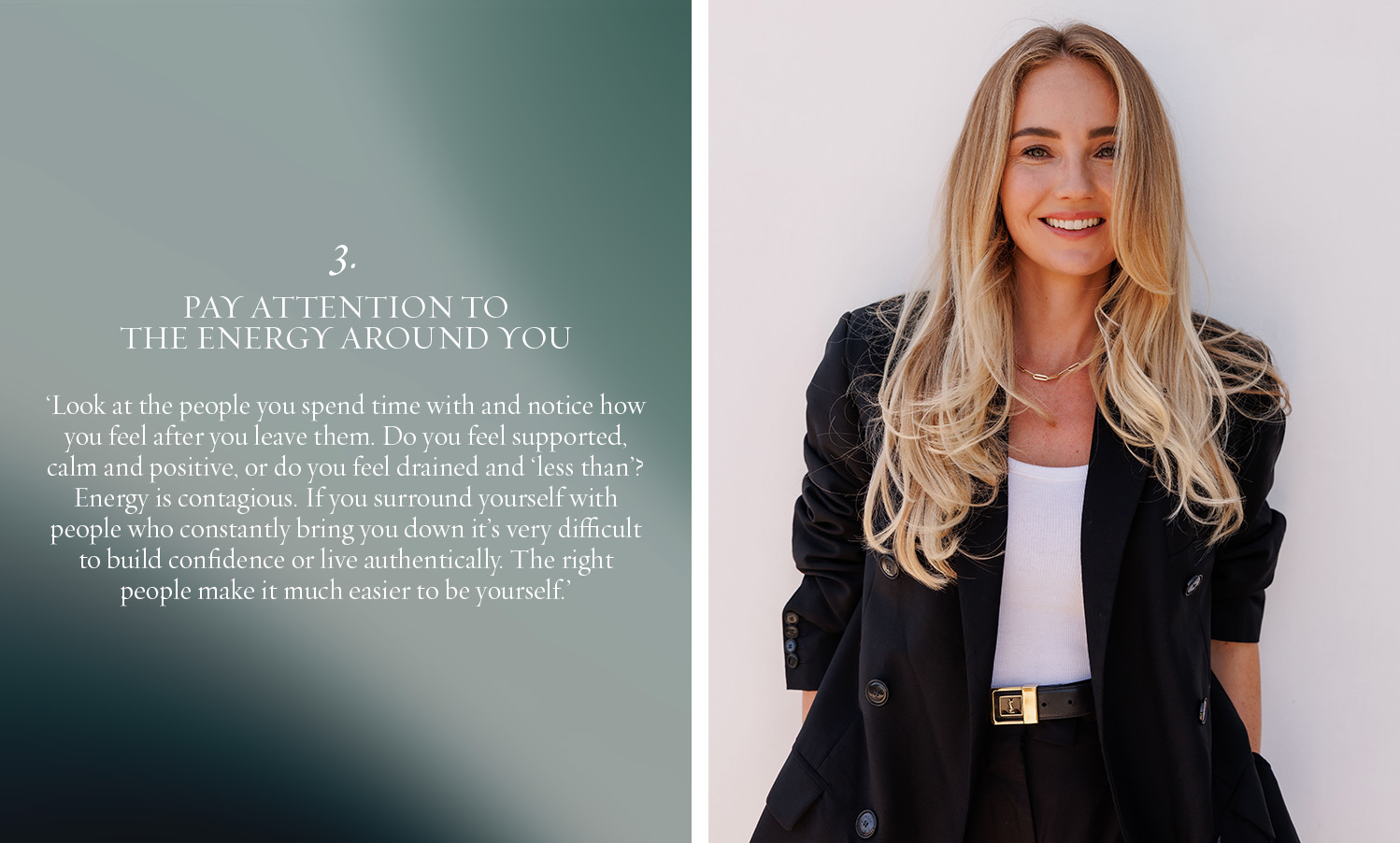
The work of authenticity, as she describes it, begins with recognising those dynamics rather than automatically stepping back into them. That process requires a pause – a moment of awareness between impulse and action – something that modern life rarely encourages. Most people move through their days reacting quickly: answering messages instantly, agreeing to plans automatically, responding to emotional triggers without stopping to consider where the reaction is coming from. Weekers believes the smallest interruption in that pattern can change everything. “The power is really in the pause,” she says. It sounds almost too simple. Yet that moment – a breath before responding, a second before saying yes, a pause before reacting emotionally – creates the space where different choices become possible. The power of pausing
She compares behavioural patterns to rivers cutting through a landscape. Over time, water carves channels that become the easiest route forward. Human habits work in much the same way. The brain follows the path it already knows. Changing behaviour means carving a new channel – something that initially feels unnatural simply because it hasn’t been practiced before. Authenticity, in that sense, isn’t a dramatic reinvention. It’s a series of small, conscious decisions that gradually redirect the current.
Weekers sometimes describes the process using the language of energy. While she approaches the subject with a psychologist’s pragmatism, she also acknowledges that emotional states carry a kind of momentum. Stress, resentment, comparison and insecurity all pull a person into one frequency of experience. Authenticity, she believes, operates on another. “If you look at it from a quantum physical perspective, everything is vibration,” she says. “Low-level emotions like anger, fear or constant stress keep you in a certain state. Authenticity is a much higher vibration. When someone is truly themselves – not pretending, not chasing approval – everything about their energy shifts. They become the most magnetic person in the room.”
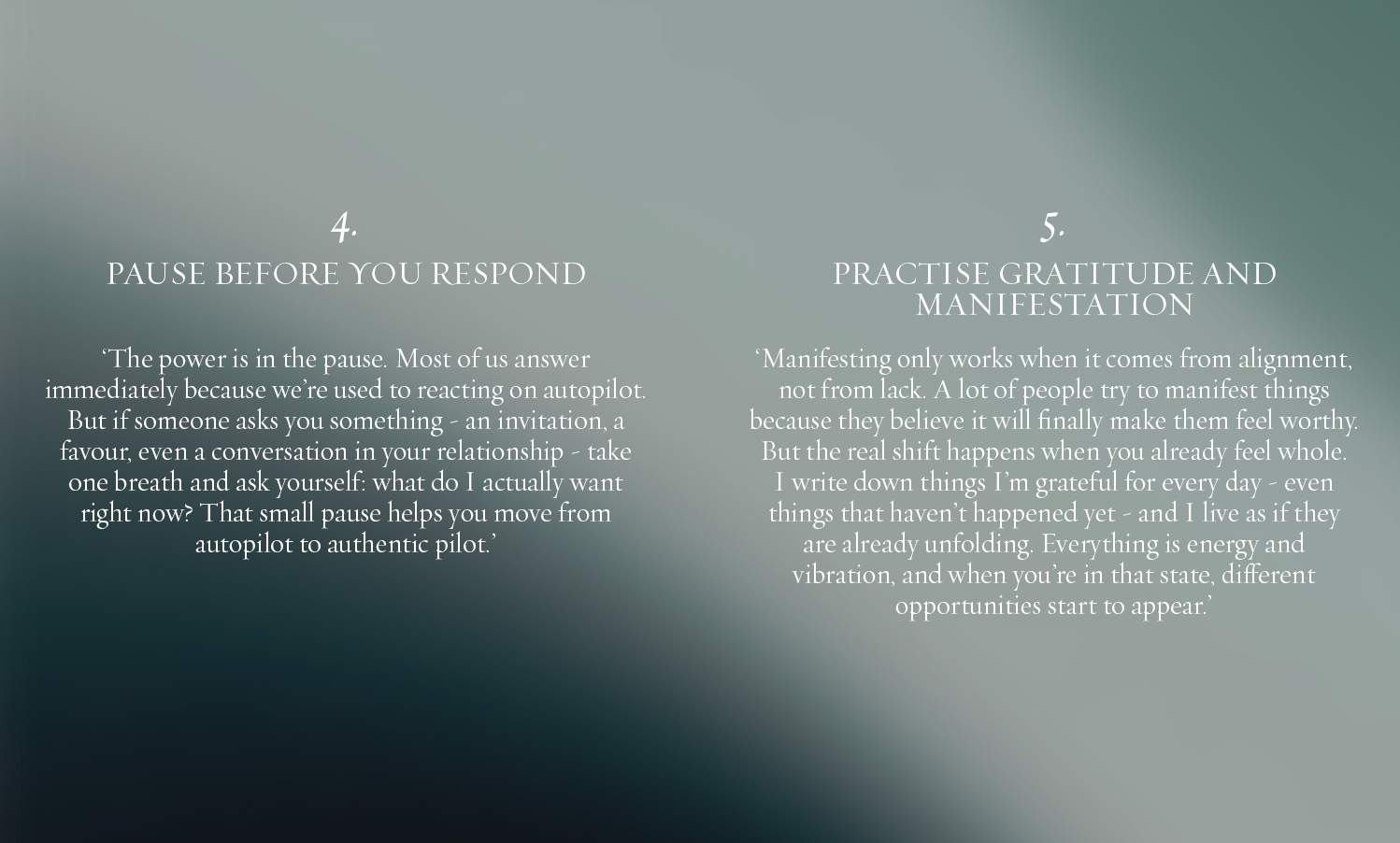
Over time, those small shifts begin to reveal something important: a life that feels authentic rarely looks identical to anyone else’s. It emerges through experimentation, mistakes and occasional course corrections rather than a single moment of clarity. People often fear those missteps, Weekers says, but they are usually the fastest way to discover what actually fits. Trying a relationship that doesn’t work, moving somewhere new, changing direction professionally – each perceived ‘failure’ simply provides information about what does and doesn’t align.
In the end, the process of stepping into authenticity is less about discovering a perfect version of yourself and more about stripping away what was never yours to begin with. Old expectations, inherited ambitions, relationships that diminish rather than support. Weekers believes the biggest hurdle for many people is the fear of what remains once those things fall away. Letting go of familiar patterns can feel unsettling, even lonely at first. Yet that space, she says, is often where the most meaningful changes begin to appear.
“When you become comfortable with yourself,” she says, “you stop trying to fit into places that were never meant for you. And that’s when the right things start to come into your life.”
by Maya Boyd
“I always say things are simple,” says Kelly Weekers, “But that doesn’t mean they’re easy.” It’s a distinction she returns to often. Human behaviour, she explains, has a strange tendency to trap us inside itself. When someone is immersed in their own habits, emotional reactions and relationships, it becomes almost impossible to see the broader picture. She compares it to standing too close to a painting in a museum. Up close, all you can see are colours and brushstrokes. The full composition only appears once you step back. “So many people are so in it,” she says. “They never really stop to ask themselves why they do what they do.”
Weekers often describes the shift she tries to guide people toward as moving from “autopilot” to what she calls “authentic pilot.” Autopilot, in her view, is the set of behaviours and thought patterns absorbed in childhood. They are the coping strategies that helped someone navigate their early environment – ways of gaining approval, avoiding rejection or maintaining a sense of safety.
These coping strategies become the default setting. The way someone reacts to criticism, the partners they gravitate towards, even the careers they pursue can often trace their roots back to those early emotional blueprints. Weekers sees it constantly in her work: people convinced they are making rational decisions in the present, while quietly replaying dynamics that first appeared decades earlier.
It starts with awareness. Much of this comes down to familiarity. The human brain, she explains, is wired to recognise patterns long before it questions them. That means even uncomfortable emotional dynamics can begin to feel normal if they echo something from childhood. “People will always chase a familiar pain over an unfamiliar new way that is probably better for them,” she says. This becomes particularly visible in relationships. Someone who grew up feeling they had to earn affection may find themselves repeatedly drawn to partners who keep that dynamic alive. The deeper desire is simple enough – to feel valued – but the situation keeps recreating the original chase rather than resolving it. Weekers describes it as a form of emotional copy-and-paste, a loop people often don’t notice until they step back far enough to see the pattern repeating itself.
When someone does finally encounter a relationship that feels calm, steady and emotionally available, it can register as strangely unfamiliar. Weekers says she sees this often with people who grew up around stress or instability. In those environments, emotional intensity becomes the baseline. Calm can feel almost suspicious. “People who grow up in stressful environments get used to stress as their comfort zone,” she explains. “So, when something peaceful comes along, they sometimes think it’s boring. But it’s not boring. It’s just healthy.”
The work of authenticity, as she describes it, begins with recognising those dynamics rather than automatically stepping back into them. That process requires a pause – a moment of awareness between impulse and action – something that modern life rarely encourages. Most people move through their days reacting quickly: answering messages instantly, agreeing to plans automatically, responding to emotional triggers without stopping to consider where the reaction is coming from. Weekers believes the smallest interruption in that pattern can change everything. “The power is really in the pause,” she says. It sounds almost too simple. Yet that moment – a breath before responding, a second before saying yes, a pause before reacting emotionally – creates the space where different choices become possible. The power of pausing
She compares behavioural patterns to rivers cutting through a landscape. Over time, water carves channels that become the easiest route forward. Human habits work in much the same way. The brain follows the path it already knows. Changing behaviour means carving a new channel – something that initially feels unnatural simply because it hasn’t been practiced before. Authenticity, in that sense, isn’t a dramatic reinvention. It’s a series of small, conscious decisions that gradually redirect the current.
Weekers sometimes describes the process using the language of energy. While she approaches the subject with a psychologist’s pragmatism, she also acknowledges that emotional states carry a kind of momentum. Stress, resentment, comparison and insecurity all pull a person into one frequency of experience. Authenticity, she believes, operates on another. “If you look at it from a quantum physical perspective, everything is vibration,” she says. “Low-level emotions like anger, fear or constant stress keep you in a certain state. Authenticity is a much higher vibration. When someone is truly themselves – not pretending, not chasing approval – everything about their energy shifts. They become the most magnetic person in the room.”
Over time, those small shifts begin to reveal something important: a life that feels authentic rarely looks identical to anyone else’s. It emerges through experimentation, mistakes and occasional course corrections rather than a single moment of clarity. People often fear those missteps, Weekers says, but they are usually the fastest way to discover what actually fits. Trying a relationship that doesn’t work, moving somewhere new, changing direction professionally – each perceived ‘failure’ simply provides information about what does and doesn’t align.
In the end, the process of stepping into authenticity is less about discovering a perfect version of yourself and more about stripping away what was never yours to begin with. Old expectations, inherited ambitions, relationships that diminish rather than support. Weekers believes the biggest hurdle for many people is the fear of what remains once those things fall away. Letting go of familiar patterns can feel unsettling, even lonely at first. Yet that space, she says, is often where the most meaningful changes begin to appear.
“When you become comfortable with yourself,” she says, “you stop trying to fit into places that were never meant for you. And that’s when the right things start to come into your life.”
DON’T MISS