The ANÍMA Review: Ananda in the Himalayas
A new series exploring the world’s most extraordinary destinations for wellbeing, from storied spa retreats to pioneering longevity clinics. We begin with Ananda in the Himalayas, a palatial sanctuary above Rishikesh that has shaped modern wellness for a generation.
JOIN THE RITUAL. SIGN UP FOR EXCLUSIVE CONTENT, EXPERT INSIGHTS,
RITUALS, STORIES, NEW LAUNCHES & EXPERIENCES
by Maya Boyd
The Overview
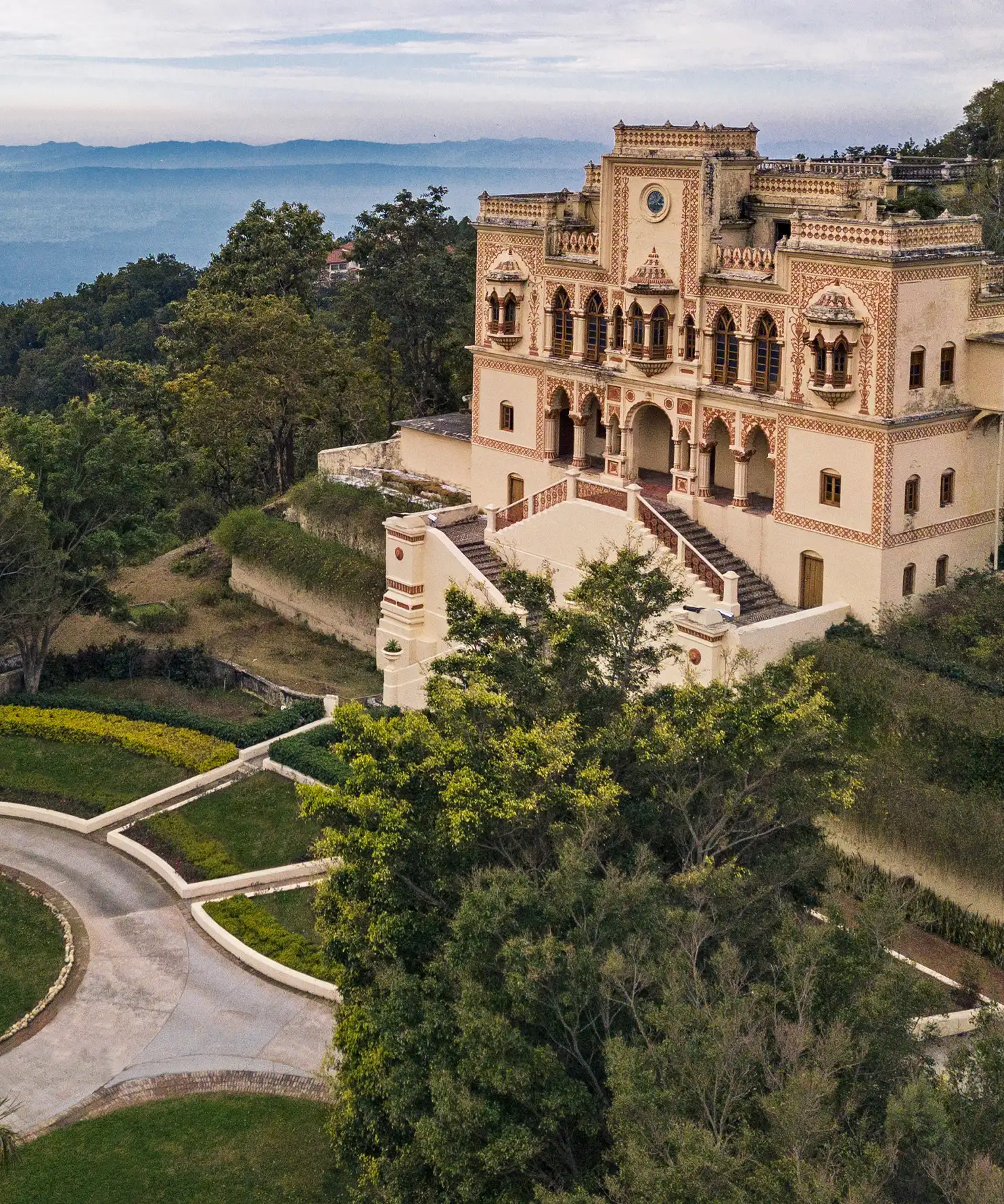
Perched high above Rishikesh in the Himalayan foothills, Ananda occupies the former estate of a maharaja’s palace, its gardens spilling down towards the valley where the Ganges curves through the mountains below. The setting alone explains why this retreat has long been ranked among the most significant wellness destinations in the world. Rishikesh itself is no ordinary location. Known as the birthplace of yoga and long considered one of India’s spiritual capitals, the town has drawn seekers, monks and philosophers for centuries.
Arrival carries a quiet sense of ceremony. Guests are welcomed with ginger tea and sandalwood smoke before a string of wooden mala beads is placed gently around the neck. Staff move with calm precision, escorting you through terraces and gardens towards the rooms. Waiting inside are crisp white cotton kurta pyjamas, which quickly become the uniform of the retreat. Guests wear them to treatments, to lunch, to dinner, moving through the day with a shared understanding that this is not a resort in the conventional sense. It is a place of retreat in the truest meaning of the word.
The Philosophy
Founded twenty-five years ago by hospitality visionary Ashok Khanna and now run by his daughter Aashica, Ananda was conceived as a meeting point between ancient healing systems and modern diagnostics. Its approach centres on Ayurveda, the 5,000-year-old Indian medical science that understands health as the balance of elemental energies within the body. These energies manifest through three primary constitutions, or doshas: vata, pitta and kapha. Where many wellness retreats borrow loosely from Ayurvedic ideas, Ananda applies them with clinical precision. Each guest begins with an in-depth consultation with an Ayurvedic physician who remains responsible for their care throughout the stay. Pulse reading, tongue diagnosis, medical history and lifestyle patterns are examined closely before a personalised programme is created according to dosha imbalance.
Alongside these traditional diagnostic methods, the retreat also incorporates a modern layer of health assessment designed to provide measurable data. Guests upload their medical history through a dedicated app before arrival, allowing doctors to review information in advance. On arrival, assessments typically include blood pressure checks and Bioelectrical Impedance Analysis (BIA), a non-invasive body composition scan that measures fat mass, fat-free mass and total body water by passing a low-level electrical current through the body. The scan provides a detailed picture of body composition and allows practitioners to track changes across the course of a stay, offering a more nuanced understanding of health than BMI alone. Depending on the programme, some guests may also be encouraged to wear sleep trackers or other monitoring devices so doctors can observe patterns and refine treatments accordingly.
The philosophy here is integration. Ayurveda forms the spine, supported by yoga, meditation, Vedanta philosophy and an increasingly sophisticated programme of Traditional Chinese Medicine. Although luxury is paramount, the aim is not indulgence but alignment. Treatments, diet and daily routines are all structured around restoring rhythm to systems that modern life has pushed out of balance.
The Rituals
The centre of daily life at Ananda is the vast spa complex set within the gardens of the estate. Inside, therapists move quietly through marble corridors lined with treatment rooms, steam chambers, hydrotherapy pools and relaxation spaces. The atmosphere is calm but purposeful. Guests often undertake four or five treatments each day, alongside yoga, meditation, breathwork and clear-eyed hikes to Himalayan temples.
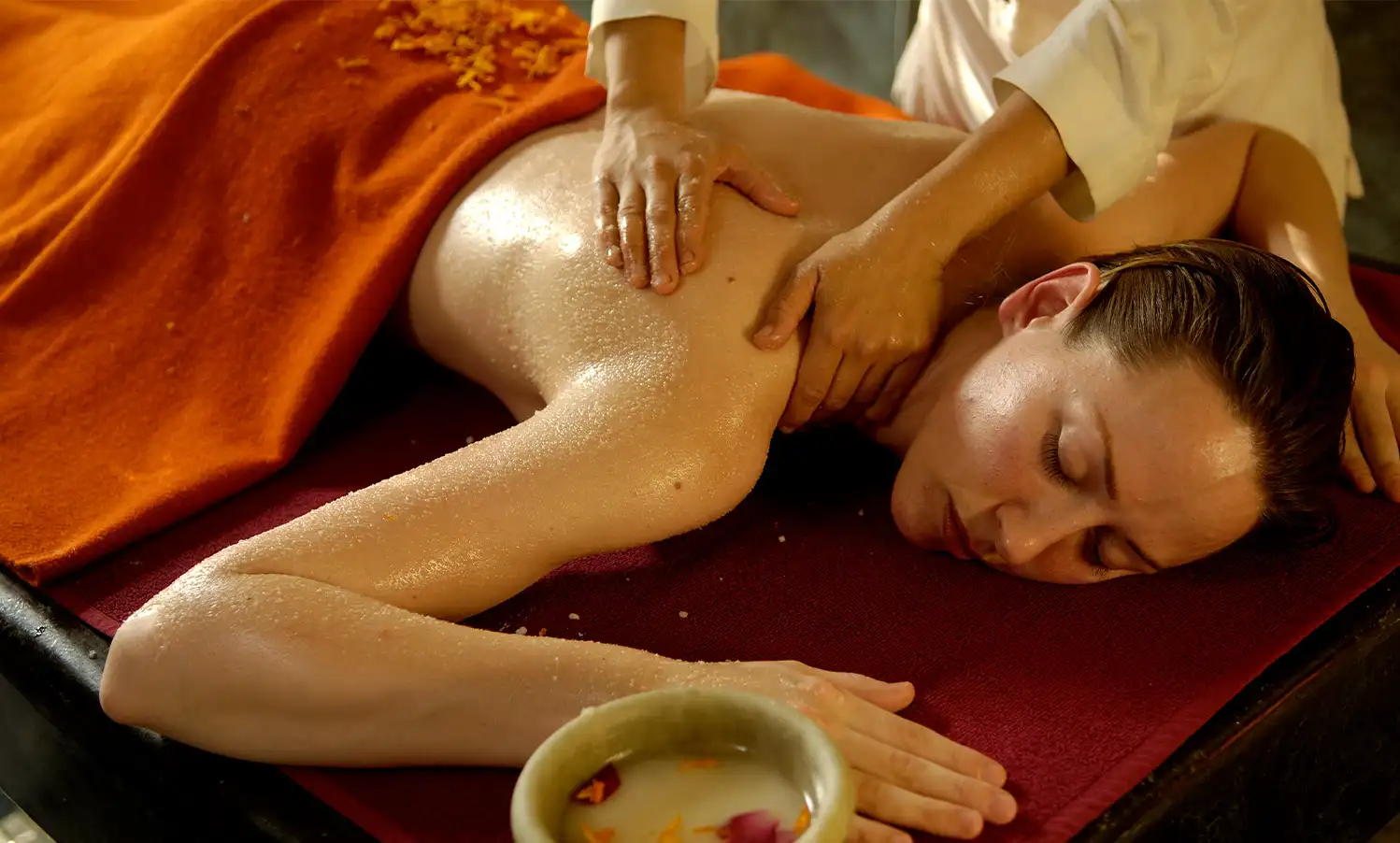
Most therapies draw directly from classical Ayurvedic medicine, with treatments such as Abhyanga, a synchronized four hand massage performed with warm herbal oils, in which two therapists move in mirrored strokes along the body to stimulate lymphatic drainage, improve circulation and help dissolve ama, the toxic residue Ayurveda believes accumulates from stress and poor digestion. Another cornerstone therapy is Udvartana, a vigorous herbal powder scrub that replaces oil with finely ground medicinal plants, worked into the skin with firm upward strokes to detoxify and exfoliate while stimulating metabolism and circulation, leaving the body lighter and the senses heightened.
Traditional Chinese Medicine adds another layer of diagnosis and treatment. Acupuncture targets blocked meridians, cupping draws out inflammation while moxibustion introduces therapeutic heat through burning mugwort. The programme is constantly adjusted through daily consultations with Ayurvedic doctors who refine treatments depending on how the body responds. The result is a system that feels both ancient and deeply methodical.
The Rooms
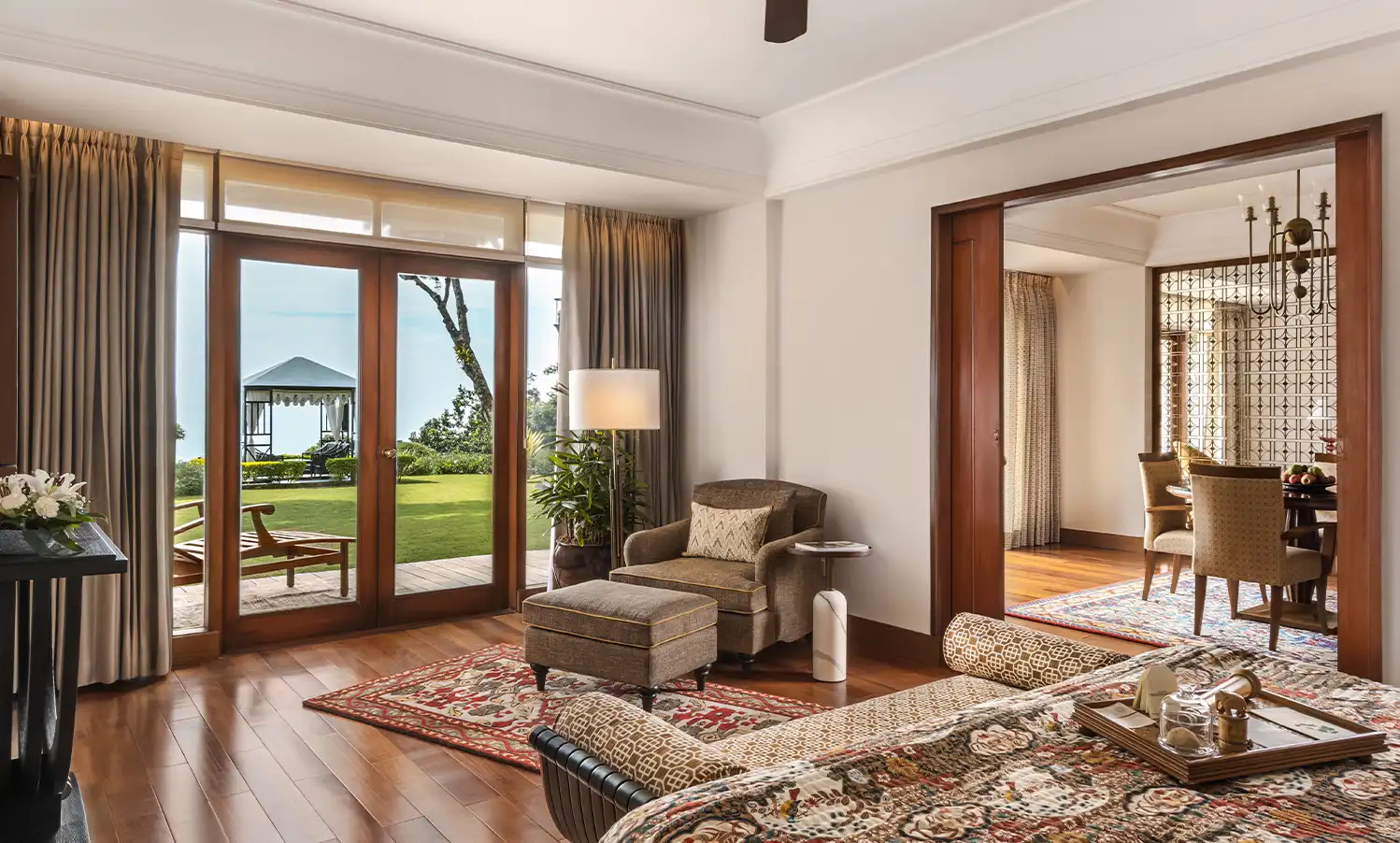
Rooms at Ananda are designed as sanctuaries between treatments. Suites open onto wide balconies overlooking the Ganges valley and the forested hills beyond. Inside, polished marble floors, generous bathrooms and oversized soaking tubs create a sense of quiet luxury that balances the rigour of the daily programme. My valley-view suite looked directly across the misty Himalayan foothills, with parrots calling from the trees each morning as the sun rose over Rishikesh. The bed itself is deliberately cocooning, with a nightly turndown that includes a hot water bottle tucked beneath the covers.
Small Ayurvedic details appear everywhere. Copper tongue scrapers sit beside the sink alongside sesame oil for oil pulling and medicated nasal drops. Herbal teas are stocked daily, plates of fresh fruit appear each afternoon and the next day’s treatment schedule arrives rolled neatly in a small bamboo cylinder placed on the bed. Even the wardrobe contains crisp white kurta pyjamas waiting in the correct size on arrival.
The Nourishment
Food at Ananda is treated as an extension of the medical programme. Meals follow strict Ayurvedic principles and are tailored to each guest’s dosha. The goal is not deprivation but balance, with dishes designed to support digestion and restore internal rhythm.
Coffee, alcohol and refined sugars disappear entirely during the stay. Instead, nourishing meals are accompanied by warm water or herbal infusions that support digestive fire. My mornings began with medicated ghee, prescribed to ground an aggravated vata constitution, followed by an astringent yet soothing aloe vera and moringa juice at breakfast to calm gut inflammation.
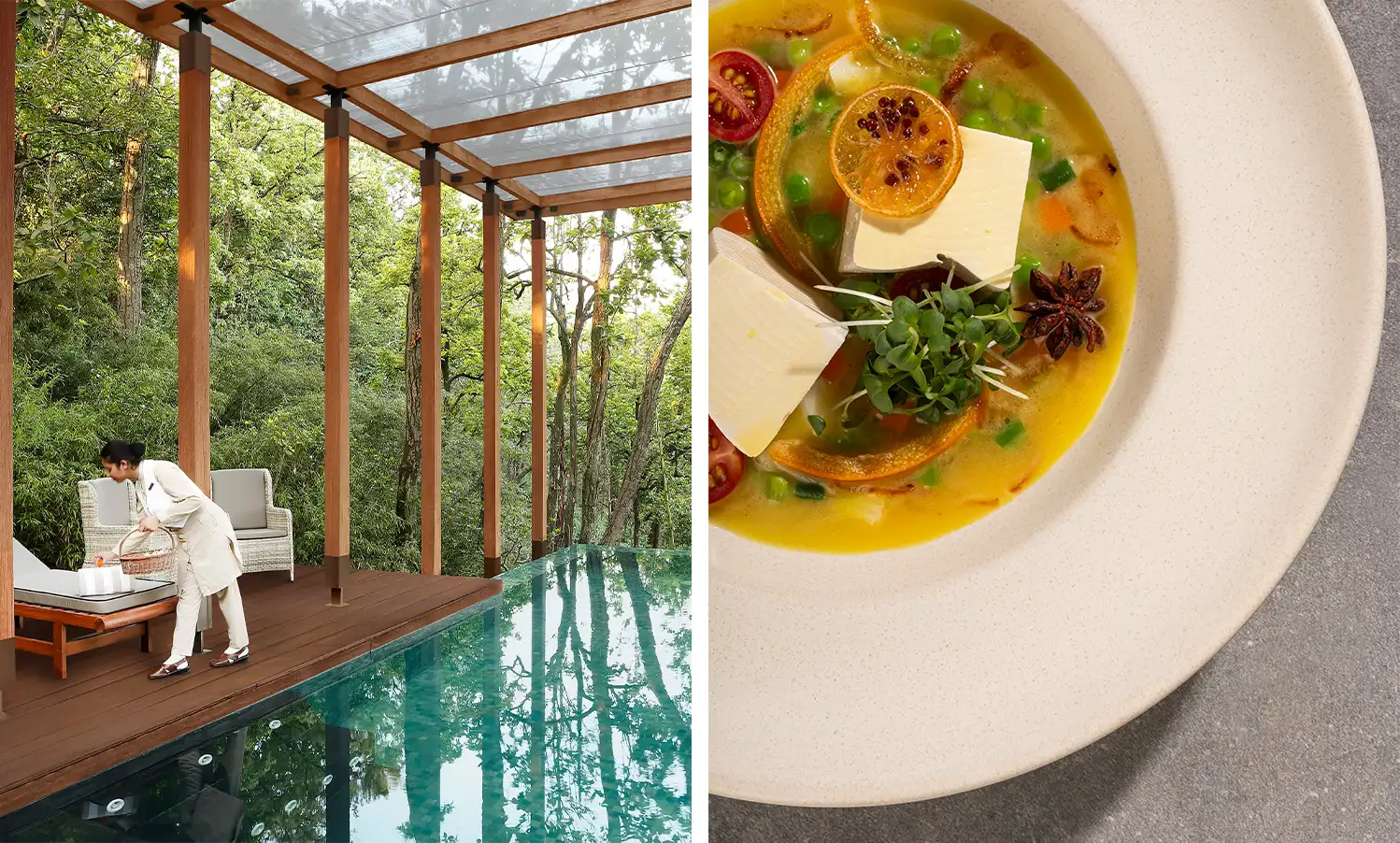
The kitchen produces dishes that are both vibrant and deeply nourishing. Mung bean dals, fragrant lentil stews, slow-cooked vegetables and light broths appear alongside salads and delicately spiced soups. The retreat’s newly-published cookbook, The Healthy Plate, distils many of these recipes into dishes designed to carry Ayurvedic principles back into everyday life.
The Crowd
Guests at Ananda arrive from across the world, from London and New York to Switzerland and Mumbai. Many travel alone and often stay for several weeks rather than a long weekend. The clientele tends to be well informed about wellness, seeking solutions for everything from burnout and nervous system exhaustion to hormonal imbalance, fertility challenges and chronic illness.
Despite the luxury setting, the mood is understated rather than glossy. Conversations at lunch tend to revolve around treatments, health progress or philosophical talks rather than social scenes. The shared commitment to the programme creates a quiet sense of community among guests, many of whom are here because conventional approaches to health have failed them.
The Afterglow
A stay at Ananda reveals its effects gradually. The structure of the days, the discipline of treatments and the steady rhythm of Ayurvedic living begin to settle the nervous system in ways that feel both physical and emotional.
For many guests, the retreat becomes a turning point. Sleep deepens. Digestion stabilises. Chronic tension begins to soften. More subtly, there is space to step back from the noise of daily life and reconsider the direction in which it is moving.
It is this combination of medical rigour, spiritual grounding and extraordinary setting that has made Ananda one of the most respected wellness retreats in the world. For those willing to engage fully with the programme, the transformation can be profound.
A 7-night Comprehensive Wellness Programme at Ananda in the Himalayas costs US$8,190 per person based on single occupancy, fully inclusive of food and all treatments.
by Maya Boyd
The Overview
Perched high above Rishikesh in the Himalayan foothills, Ananda occupies the former estate of a maharaja’s palace, its gardens spilling down towards the valley where the Ganges curves through the mountains below. The setting alone explains why this retreat has long been ranked among the most significant wellness destinations in the world. Rishikesh itself is no ordinary location. Known as the birthplace of yoga and long considered one of India’s spiritual capitals, the town has drawn seekers, monks and philosophers for centuries.
Arrival carries a quiet sense of ceremony. Guests are welcomed with ginger tea and sandalwood smoke before a string of wooden mala beads is placed gently around the neck. Staff move with calm precision, escorting you through terraces and gardens towards the rooms. Waiting inside are crisp white cotton kurta pyjamas, which quickly become the uniform of the retreat. Guests wear them to treatments, to lunch, to dinner, moving through the day with a shared understanding that this is not a resort in the conventional sense. It is a place of retreat in the truest meaning of the word.
The Philosophy
Founded twenty-five years ago by hospitality visionary Ashok Khanna and now run by his daughter Aashica, Ananda was conceived as a meeting point between ancient healing systems and modern diagnostics. Its approach centres on Ayurveda, the 5,000-year-old Indian medical science that understands health as the balance of elemental energies within the body. These energies manifest through three primary constitutions, or doshas: vata, pitta and kapha. Where many wellness retreats borrow loosely from Ayurvedic ideas, Ananda applies them with clinical precision. Each guest begins with an in-depth consultation with an Ayurvedic physician who remains responsible for their care throughout the stay. Pulse reading, tongue diagnosis, medical history and lifestyle patterns are examined closely before a personalised programme is created according to dosha imbalance.
Alongside these traditional diagnostic methods, the retreat also incorporates a modern layer of health assessment designed to provide measurable data. Guests upload their medical history through a dedicated app before arrival, allowing doctors to review information in advance. On arrival, assessments typically include blood pressure checks and Bioelectrical Impedance Analysis (BIA), a non-invasive body composition scan that measures fat mass, fat-free mass and total body water by passing a low-level electrical current through the body. The scan provides a detailed picture of body composition and allows practitioners to track changes across the course of a stay, offering a more nuanced understanding of health than BMI alone. Depending on the programme, some guests may also be encouraged to wear sleep trackers or other monitoring devices so doctors can observe patterns and refine treatments accordingly.
The philosophy here is integration. Ayurveda forms the spine, supported by yoga, meditation, Vedanta philosophy and an increasingly sophisticated programme of Traditional Chinese Medicine. Although luxury is paramount, the aim is not indulgence but alignment. Treatments, diet and daily routines are all structured around restoring rhythm to systems that modern life has pushed out of balance.
The Rituals
The centre of daily life at Ananda is the vast spa complex set within the gardens of the estate. Inside, therapists move quietly through marble corridors lined with treatment rooms, steam chambers, hydrotherapy pools and relaxation spaces. The atmosphere is calm but purposeful. Guests often undertake four or five treatments each day, alongside yoga, meditation, breathwork and clear-eyed hikes to Himalayan temples.
Most therapies draw directly from classical Ayurvedic medicine, with treatments such as Abhyanga, a synchronized four hand massage performed with warm herbal oils, in which two therapists move in mirrored strokes along the body to stimulate lymphatic drainage, improve circulation and help dissolve ama, the toxic residue Ayurveda believes accumulates from stress and poor digestion. Another cornerstone therapy is Udvartana, a vigorous herbal powder scrub that replaces oil with finely ground medicinal plants, worked into the skin with firm upward strokes to detoxify and exfoliate while stimulating metabolism and circulation, leaving the body lighter and the senses heightened.
Traditional Chinese Medicine adds another layer of diagnosis and treatment. Acupuncture targets blocked meridians, cupping draws out inflammation while moxibustion introduces therapeutic heat through burning mugwort. The programme is constantly adjusted through daily consultations with Ayurvedic doctors who refine treatments depending on how the body responds. The result is a system that feels both ancient and deeply methodical.
The Rooms
Rooms at Ananda are designed as sanctuaries between treatments. Suites open onto wide balconies overlooking the Ganges valley and the forested hills beyond. Inside, polished marble floors, generous bathrooms and oversized soaking tubs create a sense of quiet luxury that balances the rigour of the daily programme. My valley-view suite looked directly across the misty Himalayan foothills, with parrots calling from the trees each morning as the sun rose over Rishikesh. The bed itself is deliberately cocooning, with a nightly turndown that includes a hot water bottle tucked beneath the covers.
Small Ayurvedic details appear everywhere. Copper tongue scrapers sit beside the sink alongside sesame oil for oil pulling and medicated nasal drops. Herbal teas are stocked daily, plates of fresh fruit appear each afternoon and the next day’s treatment schedule arrives rolled neatly in a small bamboo cylinder placed on the bed. Even the wardrobe contains crisp white kurta pyjamas waiting in the correct size on arrival.
The Nourishment
Food at Ananda is treated as an extension of the medical programme. Meals follow strict Ayurvedic principles and are tailored to each guest’s dosha. The goal is not deprivation but balance, with dishes designed to support digestion and restore internal rhythm.
Coffee, alcohol and refined sugars disappear entirely during the stay. Instead, nourishing meals are accompanied by warm water or herbal infusions that support digestive fire. My mornings began with medicated ghee, prescribed to ground an aggravated vata constitution, followed by an astringent yet soothing aloe vera and moringa juice at breakfast to calm gut inflammation.
The kitchen produces dishes that are both vibrant and deeply nourishing. Mung bean dals, fragrant lentil stews, slow-cooked vegetables and light broths appear alongside salads and delicately spiced soups. The retreat’s newly-published cookbook, The Healthy Plate, distils many of these recipes into dishes designed to carry Ayurvedic principles back into everyday life.
The Crowd
Guests at Ananda arrive from across the world, from London and New York to Switzerland and Mumbai. Many travel alone and often stay for several weeks rather than a long weekend. The clientele tends to be well informed about wellness, seeking solutions for everything from burnout and nervous system exhaustion to hormonal imbalance, fertility challenges and chronic illness.
Despite the luxury setting, the mood is understated rather than glossy. Conversations at lunch tend to revolve around treatments, health progress or philosophical talks rather than social scenes. The shared commitment to the programme creates a quiet sense of community among guests, many of whom are here because conventional approaches to health have failed them.
The Afterglow
A stay at Ananda reveals its effects gradually. The structure of the days, the discipline of treatments and the steady rhythm of Ayurvedic living begin to settle the nervous system in ways that feel both physical and emotional.
For many guests, the retreat becomes a turning point. Sleep deepens. Digestion stabilises. Chronic tension begins to soften. More subtly, there is space to step back from the noise of daily life and reconsider the direction in which it is moving.
It is this combination of medical rigour, spiritual grounding and extraordinary setting that has made Ananda one of the most respected wellness retreats in the world. For those willing to engage fully with the programme, the transformation can be profound.
A 7-night Comprehensive Wellness Programme at Ananda in the Himalayas costs US$8,190 per person based on single occupancy, fully inclusive of food and all treatments.
DON’T MISS