Year of the Horse: The Intelligence of Instinct
The Year of the Horse invites a return to instinct, independence and collective momentum. In a protected valley in the north of Ibiza, rescued horses live without imposed structure or demand and, through their own recovery, have quietly catalysed a somatic practice guided by the innate intelligence of the herd.
JOIN THE RITUAL. SIGN UP FOR EXCLUSIVE CONTENT, EXPERT INSIGHTS,
RITUALS, STORIES, NEW LAUNCHES & EXPERIENCES
By Maya Boyd
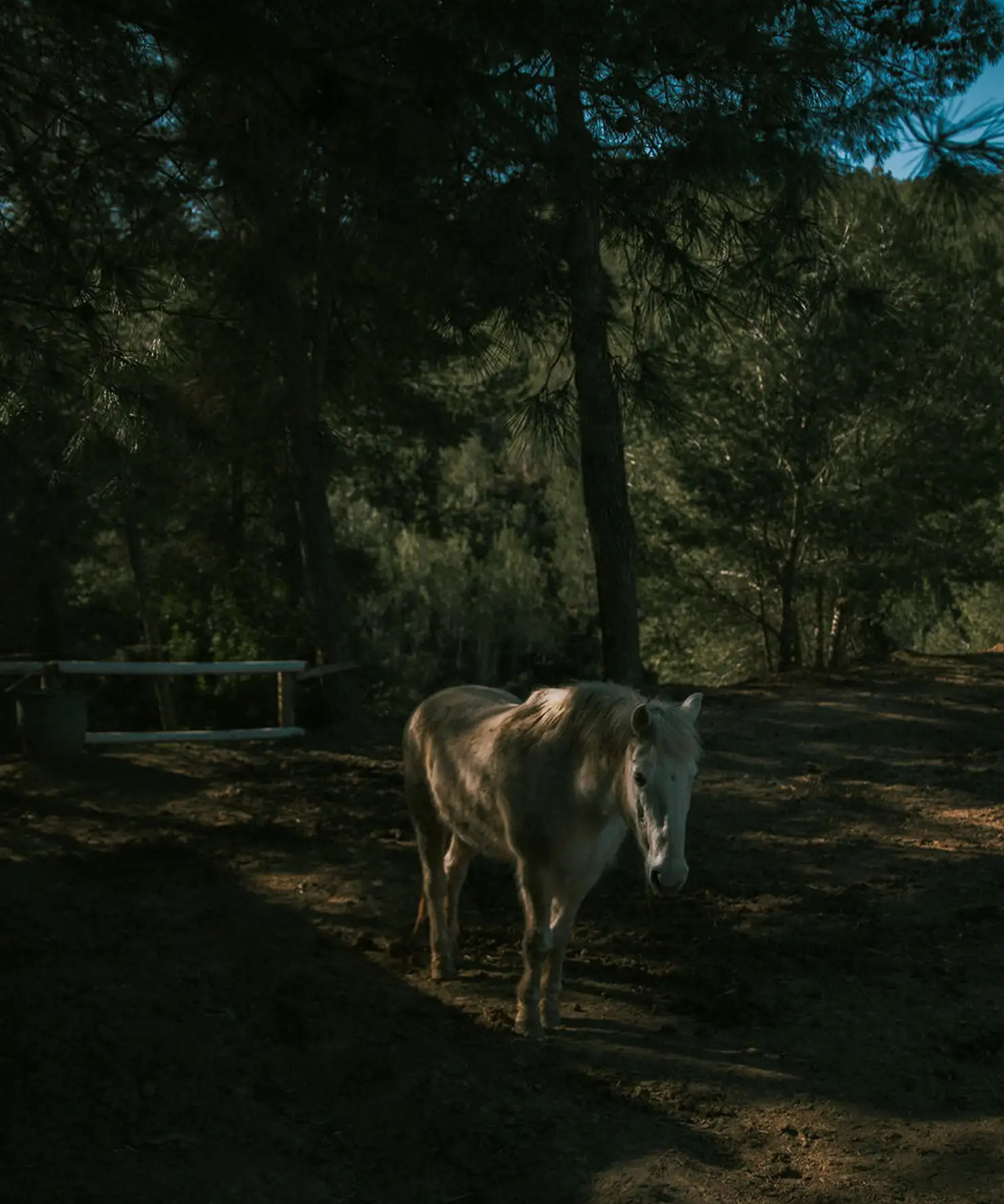
Ibiza Horse Valley began with a frustration that hardened into resolve. David Capdevielle had spent years working in conventional stables, watching horses deteriorate under systems designed for human convenience. “People would come to him every day saying their horse was ‘difficult’,” says Monique Tjon, his partner and cofounder. “But David always said the same thing. The horse wasn’t the problem. The way we treat them is.”
Together, they imagined a sanctuary. Rescue horses only. Animals abandoned, traumatised or deemed unworkable. They would live together day and night, across a wide swathe of land in a protected valley. No isolation. No boxes. No rigid training programmes imposed from the outside. “We didn’t want to rehabilitate them in the human sense,” Monique says. “We wanted to stop interfering and let them recover their own intelligence.”
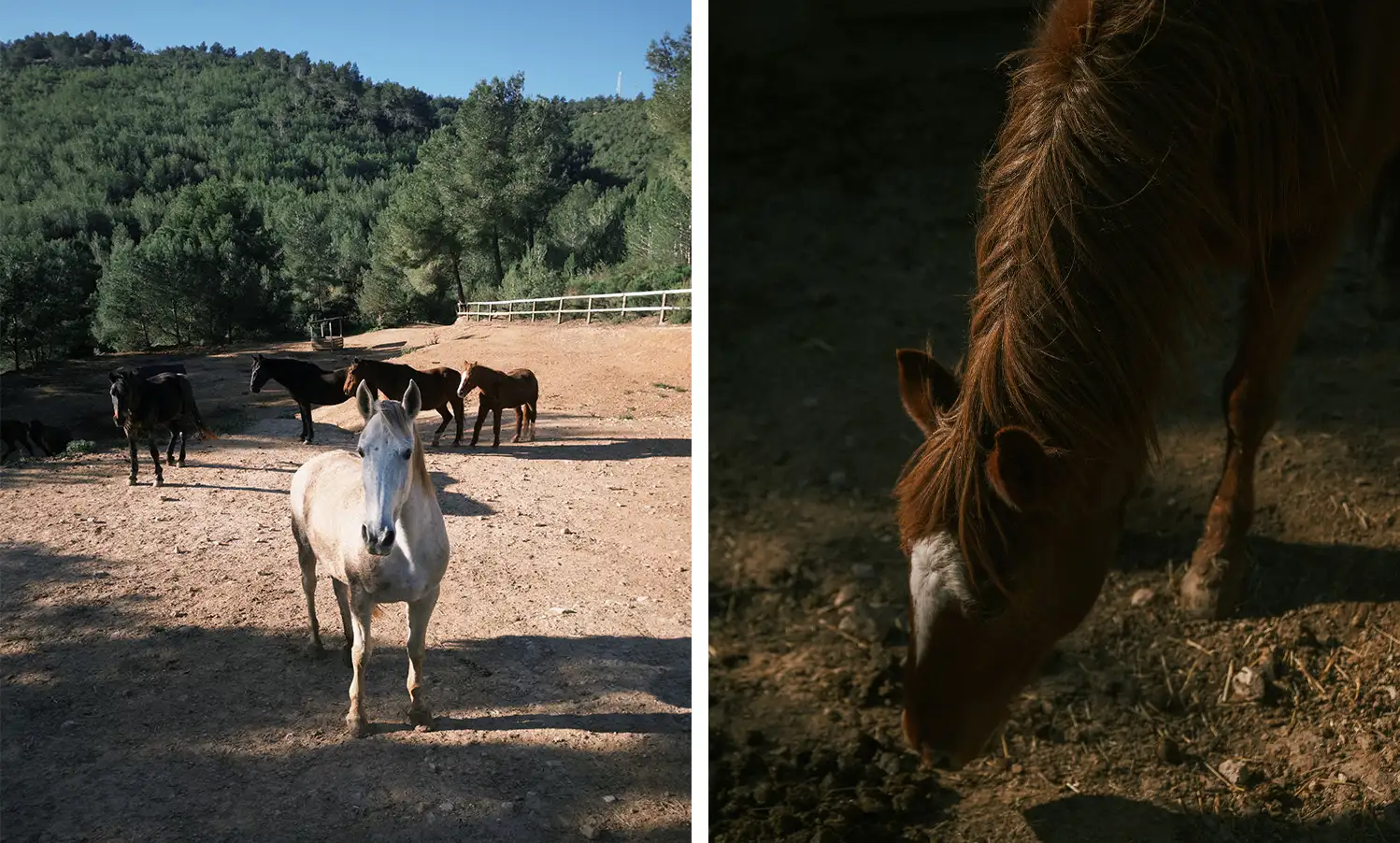
They started with two horses. Over time, others arrived. Horses fresh from neglect, from failed ownership and from situations where they had simply been discarded. What surprised Monique most was not just individual change, but what happened collectively. “With time and space, they switched back to their instinct and formed a herd,” she says. “And that was when you could see it. Why one horse behaved the way it did. Why another was holding tension. Everything reorganised.”
© Sylvie Gianella
Horses that had arrived shut down or reactive softened. Not because they were trained, but because they were no longer alone. “Isolation damages horses,” Monique says plainly. “They lose instinct. They lose regulation. Put them back together, give them space, remove constant control, and they remember how to be.”
Visitors began coming to the valley, often expecting riding. Instead, they were asked to walk, listen, learn. Horses would approach without being summoned. Or they wouldn’t. “People always want to choose the horse,” Monique says. “But it’s the horses who choose. And they are very clear.”
At the time, Monique’s daughter Mya was living elsewhere. Raised on the island, she left to study philosophy in Amsterdam, then trained as a somatic therapist in Berlin. When David passed away suddenly, Mya returned to Ibiza to help hold the sanctuary together. “For five years, it was just survival,” Monique says. “Keeping myself and the horses alive.”
What emerged next was unplanned but has forged a new path for Ibiza’s beloved Horse Valley.
“I have never wanted to ‘use’ horses in my work,” Mya says. “These animals were traumatised by humans. I was very clear that if anything happened, it had to be on their terms.”
Mya’s practice is somatic therapy, focused on nervous system regulation rather than narrative or catharsis. Sessions combine touch, breath, body awareness and conversation, always paced by the client’s capacity to stay present. “We’re not taught to listen to the body,” she says. “We’re taught to override it. Trauma lives in that gap.”
© Sylvie Gianella
Out of curiosity rather than intention, Mya wondered what would happen if she worked exactly as she did indoors, but within the herd. “I just put my table down in the valley,” she says. “Same session. No expectation.”
What followed changed the shape of the work entirely.
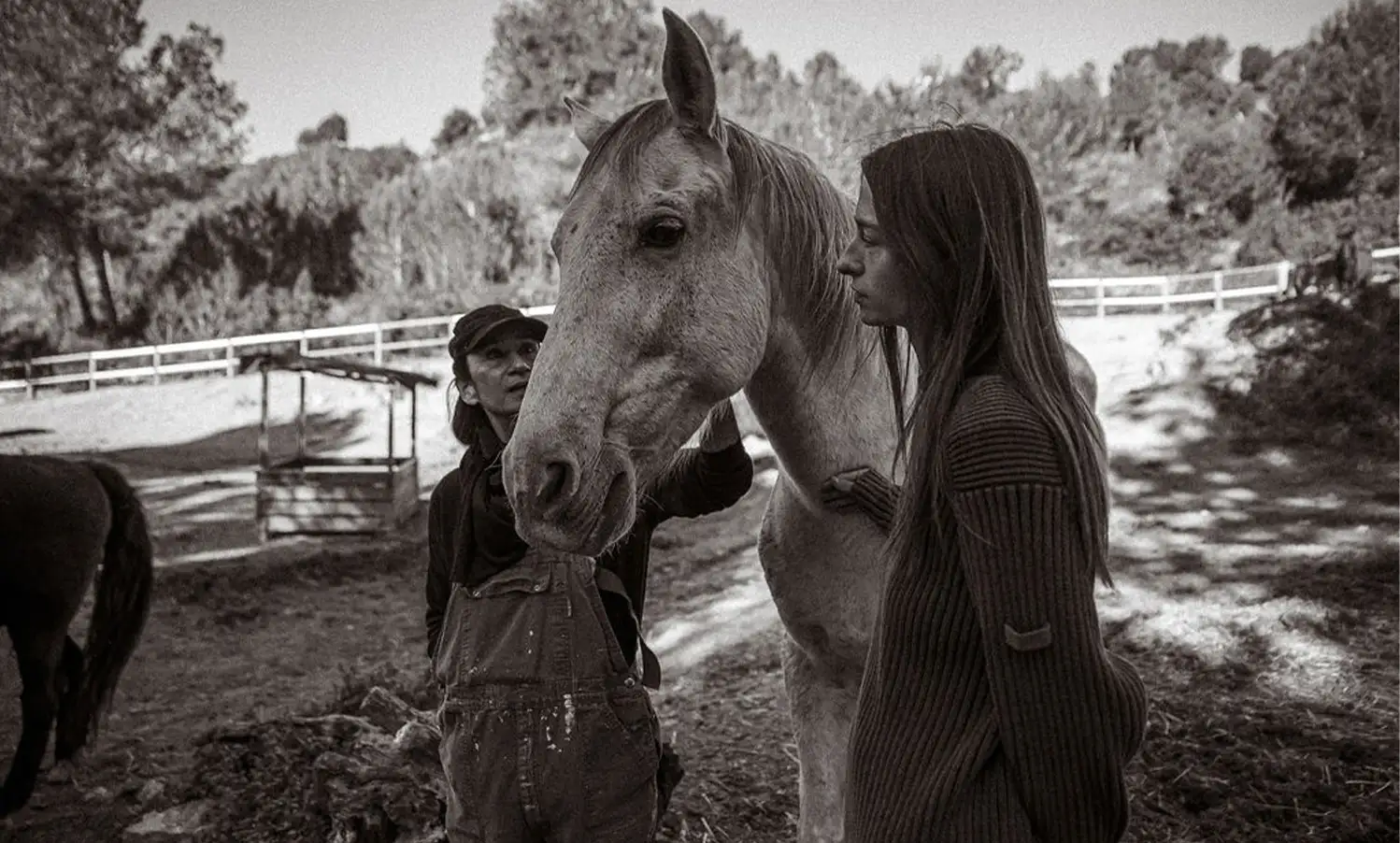
As clients begin settling into their bodies, horses respond. Some remain grazing at a distance. Others stand along the edges of the space, alert but still. Occasionally, one will step forward and stay. Not performing or demanding. Simply placing a head against a shoulder, a leg, a stomach. Perhaps nudging a foot or a hand.
“There are regulating us through the field of the herd constellation,” Mya says. “Breath, muscle tone, heart rate. They are creating safety within us. They feel it before we name it.”
There is often little touch between human and horse. The work is not about interaction but presence. Horses have hearts five times larger than a human’s, with vast electromagnetic fields that extend far beyond the body. Clients describe a slowing, an almost psychedelic sense of being held by something greater than themselves. “People might think if a horse isn’t touching you, nothing’s happening,” Mya explains. “But that’s not how the nervous system works.”
© Sylvie Gianella
Trauma, in Mya’s view, is not something to be forced open. “The body needs to feel safe before anything else,” she says. “And when things get overwhelming, humans dissociate. Horses don’t push you through that. They bring you back, gently, into the now.”
Sessions last around two hours, though time becomes slippery. “The herd doesn’t work on schedules,” Mya says. “Neither does the body.”
Crucially, the work only exists because the horses live as a herd. “Without that,” according to Mya, “this would be unethical. You can’t assign a horse the role of healer. They have to choose.”
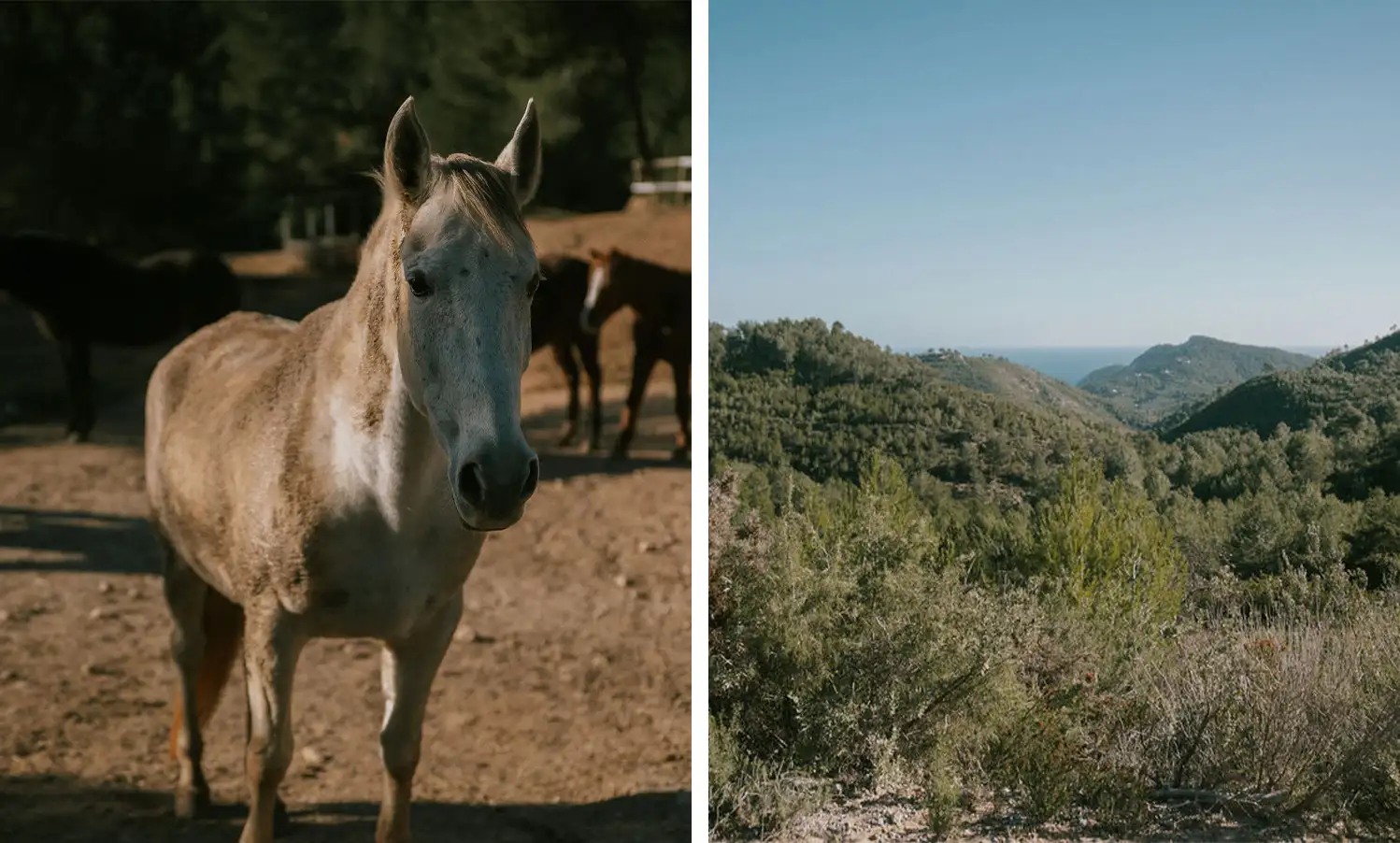
There is a quiet reciprocity to the place. Horses that healed through community now offer regulation back, without obligation. The valley remains private, visits by prior arrangement only. “This is their home,” Monique says. “We are simply guests. We treat the herd with the utmost respect.”
Ibiza Horse Valley is a non-profit association and is not sponsored by the government. All donations go directly towards food for the herd, veterinary care, farrier services and the ongoing maintenance of The Valley.
By Maya Boyd
Ibiza Horse Valley began with a frustration that hardened into resolve. David Capdevielle had spent years working in conventional stables, watching horses deteriorate under systems designed for human convenience. “People would come to him every day saying their horse was ‘difficult’,” says Monique Tjon, his partner and cofounder. “But David always said the same thing. The horse wasn’t the problem. The way we treat them is.”
Together, they imagined a sanctuary. Rescue horses only. Animals abandoned, traumatised or deemed unworkable. They would live together day and night, across a wide swathe of land in a protected valley. No isolation. No boxes. No rigid training programmes imposed from the outside. “We didn’t want to rehabilitate them in the human sense,” Monique says. “We wanted to stop interfering and let them recover their own intelligence.”
They started with two horses. Over time, others arrived. Horses fresh from neglect, from failed ownership and from situations where they had simply been discarded. What surprised Monique most was not just individual change, but what happened collectively. “With time and space, they switched back to their instinct and formed a herd,” she says. “And that was when you could see it. Why one horse behaved the way it did. Why another was holding tension. Everything reorganised.”
© Sylvie Gianella
Horses that had arrived shut down or reactive softened. Not because they were trained, but because they were no longer alone. “Isolation damages horses,” Monique says plainly. “They lose instinct. They lose regulation. Put them back together, give them space, remove constant control, and they remember how to be.”
Visitors began coming to the valley, often expecting riding. Instead, they were asked to walk, listen, learn. Horses would approach without being summoned. Or they wouldn’t. “People always want to choose the horse,” Monique says. “But it’s the horses who choose. And they are very clear.”
At the time, Monique’s daughter Mya was living elsewhere. Raised on the island, she left to study philosophy in Amsterdam, then trained as a somatic therapist in Berlin. When David passed away suddenly, Mya returned to Ibiza to help hold the sanctuary together. “For five years, it was just survival,” Monique says. “Keeping myself and the horses alive.”
What emerged next was unplanned but has forged a new path for Ibiza’s beloved Horse Valley.
“I have never wanted to ‘use’ horses in my work,” Mya says. “These animals were traumatised by humans. I was very clear that if anything happened, it had to be on their terms.”
Mya’s practice is somatic therapy, focused on nervous system regulation rather than narrative or catharsis. Sessions combine touch, breath, body awareness and conversation, always paced by the client’s capacity to stay present. “We’re not taught to listen to the body,” she says. “We’re taught to override it. Trauma lives in that gap.”
© Sylvie Gianella
Out of curiosity rather than intention, Mya wondered what would happen if she worked exactly as she did indoors, but within the herd. “I just put my table down in the valley,” she says. “Same session. No expectation.”
What followed changed the shape of the work entirely.
As clients begin settling into their bodies, horses respond. Some remain grazing at a distance. Others stand along the edges of the space, alert but still. Occasionally, one will step forward and stay. Not performing or demanding. Simply placing a head against a shoulder, a leg, a stomach. Perhaps nudging a foot or a hand.
“There are regulating us through the field of the herd constellation,” Mya says. “Breath, muscle tone, heart rate. They are creating safety within us. They feel it before we name it.”
There is often little touch between human and horse. The work is not about interaction but presence. Horses have hearts five times larger than a human’s, with vast electromagnetic fields that extend far beyond the body. Clients describe a slowing, an almost psychedelic sense of being held by something greater than themselves. “People might think if a horse isn’t touching you, nothing’s happening,” Mya explains. “But that’s not how the nervous system works.”
© Sylvie Gianella
Trauma, in Mya’s view, is not something to be forced open. “The body needs to feel safe before anything else,” she says. “And when things get overwhelming, humans dissociate. Horses don’t push you through that. They bring you back, gently, into the now.”
Sessions last around two hours, though time becomes slippery. “The herd doesn’t work on schedules,” Mya says. “Neither does the body.”
Crucially, the work only exists because the horses live as a herd. “Without that,” according to Mya, “this would be unethical. You can’t assign a horse the role of healer. They have to choose.”
There is a quiet reciprocity to the place. Horses that healed through community now offer regulation back, without obligation. The valley remains private, visits by prior arrangement only. “This is their home,” Monique says. “We are simply guests. We treat the herd with the utmost respect.”
Ibiza Horse Valley is a non-profit association and is not sponsored by the government. All donations go directly towards food for the herd, veterinary care, farrier services and the ongoing maintenance of The Valley.
DON’T MISS