
The Art of Kobido with Fulvia Marengo
In an age of aesthetic intervention, an ancient Japanese facial massage is making a remarkable comeback.
JOIN THE RITUAL. SIGN UP FOR EXCLUSIVE CONTENT, EXPERT INSIGHTS,
RITUALS, STORIES, NEW LAUNCHES & EXPERIENCES

By Maya Boyd
On a quiet corner of the island, Fulvia Marengo practises Kobido with a kind of focus that feels increasingly rare. No machines, no clinical chill, no hard sell. Just hands moving quickly, almost musically, across the face. “It’s not a facial,” she says, early on, gently resetting the frame.
“It’s a massage. Very precise, very fast.” Kobido, the technique she works with, carries the weight of centuries. Originating in Japan around 1472, it was once reserved for imperial ritual, a treatment said to have passed from samurai to court before slipping quietly into the modern world in the late twentieth century. Now, it lands at a moment when beauty is shifting again, away from intervention and back towards maintenance, towards something slower, more considered.
Marengo did not arrive at it in a straight line. “I’ve always been curious,” she says. “I like to learn, to change, to try different things.” There have been many versions of her life. Painter, yoga teacher, a decade spent working as a water massage therapist. The common thread is touch, and a deepening understanding of how the body holds itself.
Kobido came later, almost accidentally. A friend in Italy introduced her to it, informal exchanges that turned into something more focused. “At the beginning, it was just for me,” she says. “I wanted to understand it, to feel it properly.” What followed was a period of self-study, then formal training. Something shifted during that training. “My teacher asked me if I had done it before,” she says, still slightly surprised. “I hadn’t. But it felt natural straight away.” She pauses. “I think it’s the hands. I’ve always worked with my hands, so there is already a connection.”
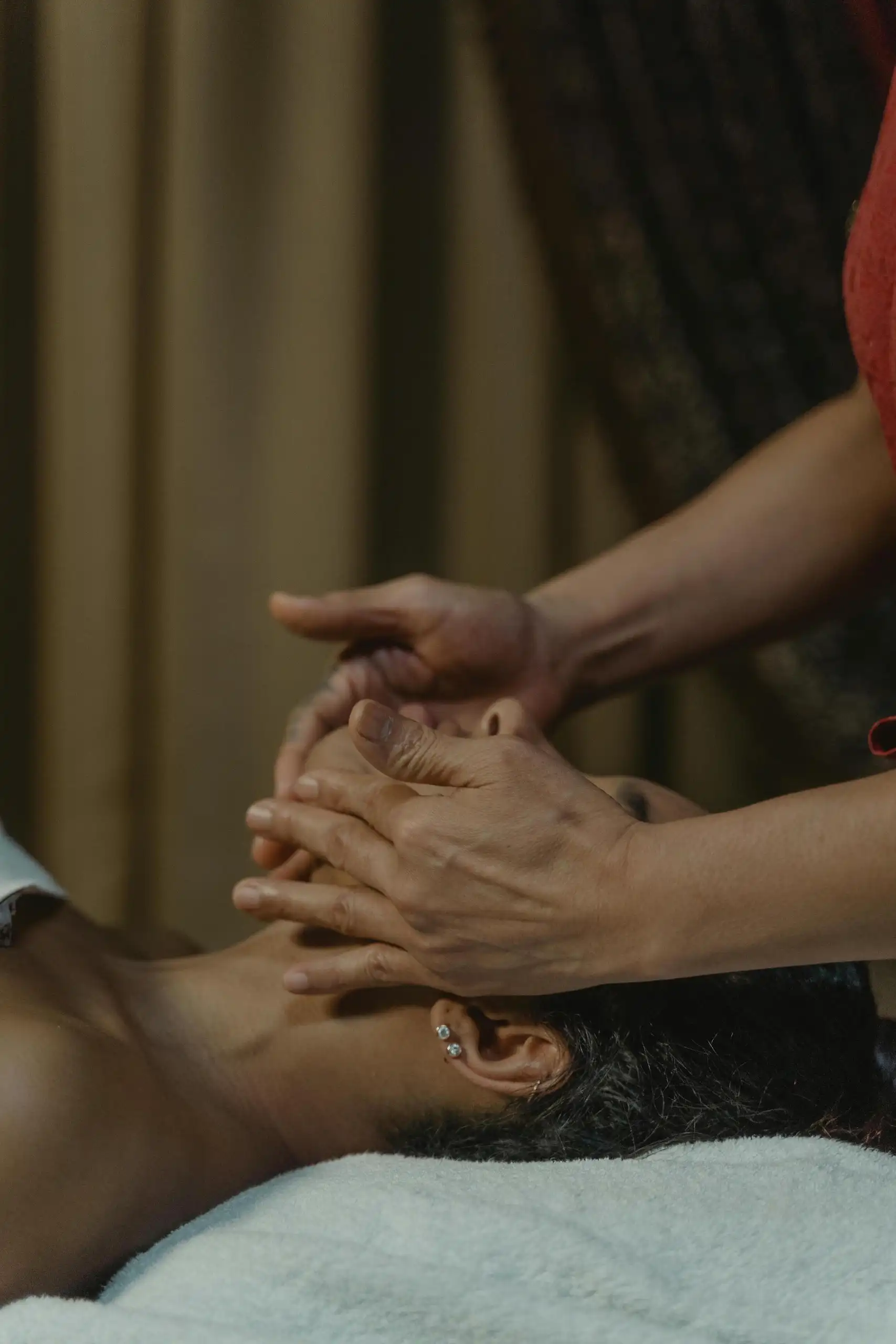
Watching her work, that connection is unmistakable. The movements are quick but never rushed. One hand lifts while the other presses, one anchors while the other releases. It requires coordination, a kind of independence between left and right that she links, almost offhandedly, to years of playing guitar.
The intention is not transformation, at least not in the way the word is usually understood.
“It’s about bringing the skin back to life,”
“It’s about bringing the skin back to life,”
she says. “You stimulate circulation, you bring oxygen, you help the skin to work better by itself.”
There are no elaborate products involved, just a small amount of oil to allow the hands to move freely. The rest is technique. Sixteen superficial facial muscles are worked through repeated sequences, combined with vital lymphatic drainage to clear stagnation and acupressure to activate specific points across the face. “It’s extraordinarily complete,” she says. “You work on muscles, on circulation, on energy.”
The face, crucially, is not treated in isolation. Tension in the neck, the scalp, even the jaw feeds into what shows up on the surface. Much of the treatment begins there. “If everything around is tight, the face reflects it,” she says. “So, you have to start by releasing that.”
The results are immediate. Skin appears clearer, tone more even, the overall expression softened. “The first thing people notice is the colour,” she says. “The skin looks fresher, more awake.” By the next day, the effect can deepen further. “Sometimes the change is remarkable. People say they look like themselves from a decade ago.” It is not positioned as a one-off fix. “If someone wants real results, it has to be regular at the beginning,” she says. A short series, close together, then maintenance.
What Kobido does, at its core, is mechanical. Repeated stimulation increases local blood flow, accelerates lymphatic drainage and reduces fluid retention. Muscle fibres are alternately activated and released, which can soften habitual tension patterns across the face. Over time, that combination supports better oxygen delivery and more efficient cellular turnover, both directly linked to skin clarity and elasticity
No needles, no filler, no freezing. Just circulation, pressure and time.
No needles, no filler, no freezing. Just circulation, pressure and time.
By Maya Boyd
On a quiet corner of the island, Fulvia Marengo practises Kobido with a kind of focus that feels increasingly rare. No machines, no clinical chill, no hard sell. Just hands moving quickly, almost musically, across the face. “It’s not a facial,” she says, early on, gently resetting the frame.
“It’s a massage. Very precise, very fast.” Kobido, the technique she works with, carries the weight of centuries. Originating in Japan around 1472, it was once reserved for imperial ritual, a treatment said to have passed from samurai to court before slipping quietly into the modern world in the late twentieth century. Now, it lands at a moment when beauty is shifting again, away from intervention and back towards maintenance, towards something slower, more considered.
Marengo did not arrive at it in a straight line. “I’ve always been curious,” she says. “I like to learn, to change, to try different things.” There have been many versions of her life. Painter, yoga teacher, a decade spent working as a water massage therapist. The common thread is touch, and a deepening understanding of how the body holds itself.
Kobido came later, almost accidentally. A friend in Italy introduced her to it, informal exchanges that turned into something more focused. “At the beginning, it was just for me,” she says. “I wanted to understand it, to feel it properly.” What followed was a period of self-study, then formal training. Something shifted during that training. “My teacher asked me if I had done it before,” she says, still slightly surprised. “I hadn’t. But it felt natural straight away.” She pauses. “I think it’s the hands. I’ve always worked with my hands, so there is already a connection.”
Watching her work, that connection is unmistakable. The movements are quick but never rushed. One hand lifts while the other presses, one anchors while the other releases. It requires coordination, a kind of independence between left and right that she links, almost offhandedly, to years of playing guitar.
The intention is not transformation, at least not in the way the word is usually understood.
“It’s about bringing the skin back to life,”
“It’s about bringing the skin back to life,”
she says. “You stimulate circulation, you bring oxygen, you help the skin to work better by itself.”
There are no elaborate products involved, just a small amount of oil to allow the hands to move freely. The rest is technique. Sixteen superficial facial muscles are worked through repeated sequences, combined with vital lymphatic drainage to clear stagnation and acupressure to activate specific points across the face. “It’s extraordinarily complete,” she says. “You work on muscles, on circulation, on energy.”
The face, crucially, is not treated in isolation. Tension in the neck, the scalp, even the jaw feeds into what shows up on the surface. Much of the treatment begins there. “If everything around is tight, the face reflects it,” she says. “So, you have to start by releasing that.”
The results are immediate. Skin appears clearer, tone more even, the overall expression softened. “The first thing people notice is the colour,” she says. “The skin looks fresher, more awake.” By the next day, the effect can deepen further. “Sometimes the change is remarkable. People say they look like themselves from a decade ago.” It is not positioned as a one-off fix. “If someone wants real results, it has to be regular at the beginning,” she says. A short series, close together, then maintenance.
What Kobido does, at its core, is mechanical. Repeated stimulation increases local blood flow, accelerates lymphatic drainage and reduces fluid retention. Muscle fibres are alternately activated and released, which can soften habitual tension patterns across the face. Over time, that combination supports better oxygen delivery and more efficient cellular turnover, both directly linked to skin clarity and elasticity
No needles, no filler, no freezing. Just circulation, pressure and time.
No needles, no filler, no freezing. Just circulation, pressure and time.
DON’T MISS