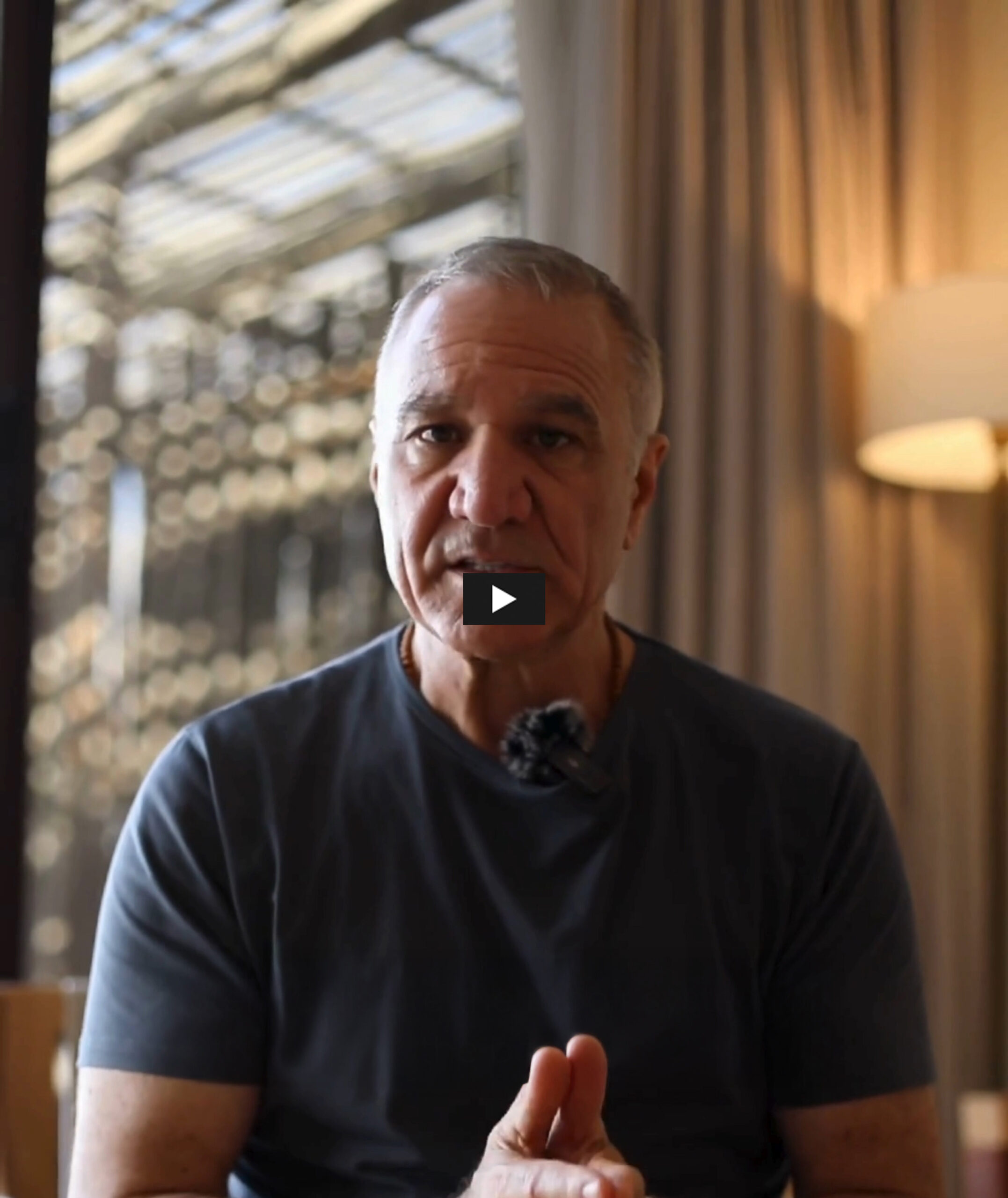
Dr. Christian Drapeau – The Expert
Dr. Christian Drapeau doesn’t talk about health in the language of limits. A soft-spoken biologist with the curiosity of a philosopher, he’s spent more than two decades exploring how the body repairs itself. His subject is stem cells – the tiny, shape-shifting units of life that hold the potential to regenerate tissue, renew organs, and perhaps slow the march of time.
“Stem cells are the body’s natural repair system.”
“Stem cells are the body’s natural repair system.”
“They have the ability to migrate to sites of damage and participate in regeneration.” To him, this isn’t abstract science. It’s evidence of a built-in intelligence, a quiet pulse of renewal that hums beneath our skin.

For years, regeneration was considered the realm of transplants and high-tech therapies. Drapeau’s research turned that idea on its head. Rather than importing cells, he began asking how to awaken the ones already inside us. His groundbreaking work focuses on endogenous stem-cell mobilization – the process of gently stimulating the bone marrow to release more stem cells into the bloodstream, where they can travel to sites of need.
Drapeau and his team investigated a wild freshwater plant known as Aphanizomenon flos-aquae (AFA). After volunteers consumed an extract of the algae, the number of circulating CD34+ stem cells – the body’s regenerative scouts – increased by roughly 25 percent within an hour. “The number of circulating stem cells,” he notes, “is a key parameter in the body’s capacity to maintain and repair itself.” The more stem cells available, the better the body can heal.

Beyond the lab, Drapeau speaks about his findings in almost poetic terms. To him, stem-cell science isn’t just medicine – it’s a philosophy of vitality. “Within each of us lies the potential for continual renewal,” he says, describing the body not as a machine wearing down but as a living ecosystem, forever remaking itself.
His Research Opens an Alluring Possibility
That wellness could become less about intervention and more about amplification. If we can safely nudge our internal repair systems to perform a little better, perhaps we can extend not just our lifespan, but our healthspan – the vibrant, unbroken stretch of years when we feel truly alive.
The science is still evolving, but Drapeau’s message is simple and quietly radical. The future of wellbeing may not be something we build outside ourselves. It may be something we rediscover within.
Dr. Christian Drapeau – The Expert
Dr. Christian Drapeau doesn’t talk about health in the language of limits. A soft-spoken biologist with the curiosity of a philosopher, he’s spent more than two decades exploring how the body repairs itself. His subject is stem cells – the tiny, shape-shifting units of life that hold the potential to regenerate tissue, renew organs, and perhaps slow the march of time.
“Stem cells are the body’s natural repair system.”
“Stem cells are the body’s natural repair system.”
“They have the ability to migrate to sites of damage and participate in regeneration.” To him, this isn’t abstract science. It’s evidence of a built-in intelligence, a quiet pulse of renewal that hums beneath our skin.
For years, regeneration was considered the realm of transplants and high-tech therapies. Drapeau’s research turned that idea on its head. Rather than importing cells, he began asking how to awaken the ones already inside us. His groundbreaking work focuses on endogenous stem-cell mobilization – the process of gently stimulating the bone marrow to release more stem cells into the bloodstream, where they can travel to sites of need.
Drapeau and his team investigated a wild freshwater plant known as Aphanizomenon flos-aquae (AFA). After volunteers consumed an extract of the algae, the number of circulating CD34+ stem cells – the body’s regenerative scouts – increased by roughly 25 percent within an hour. “The number of circulating stem cells,” he notes, “is a key parameter in the body’s capacity to maintain and repair itself.” The more stem cells available, the better the body can heal.
Beyond the lab, Drapeau speaks about his findings in almost poetic terms. To him, stem-cell science isn’t just medicine – it’s a philosophy of vitality. “Within each of us lies the potential for continual renewal,” he says, describing the body not as a machine wearing down but as a living ecosystem, forever remaking itself.
His Research Opens an Alluring Possibility
That wellness could become less about intervention and more about amplification. If we can safely nudge our internal repair systems to perform a little better, perhaps we can extend not just our lifespan, but our healthspan – the vibrant, unbroken stretch of years when we feel truly alive.
The science is still evolving, but Drapeau’s message is simple and quietly radical. The future of wellbeing may not be something we build outside ourselves. It may be something we rediscover within.
DON’T MISS