Michael Milosh of Rhye: Music, Mushrooms and the Return of Ritual
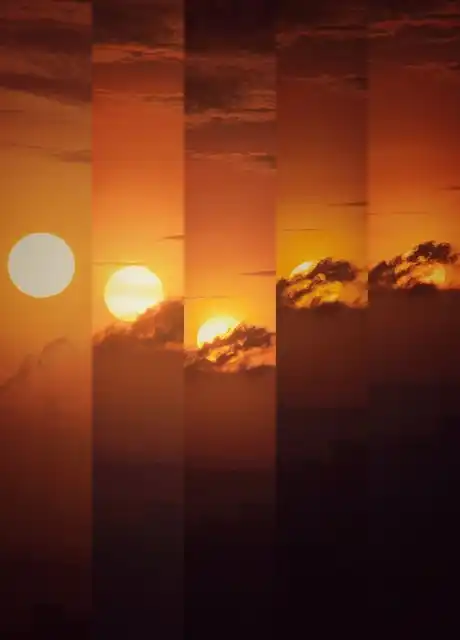
As the summer solstice approaches, communities around the world will gather around music, movement, fire and ceremony, participating in rituals that predate organised religion by thousands of years.
JOIN THE RITUAL. SIGN UP FOR EXCLUSIVE CONTENT, EXPERT INSIGHTS,
RITUALS, STORIES, NEW LAUNCHES & EXPERIENCES
By Maya Boyd
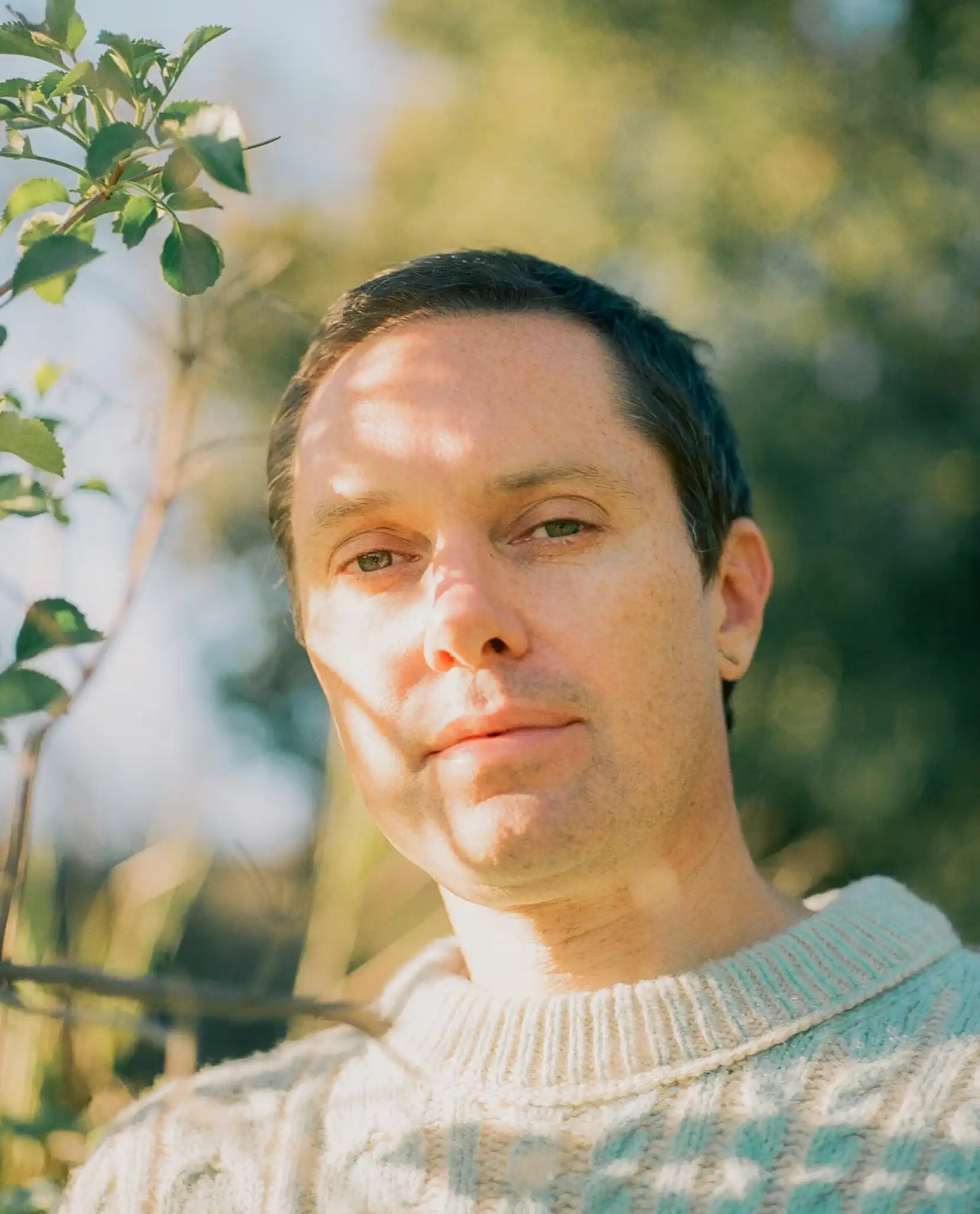
For Michael Milosh, the singer, musician and producer behind Rhye, that intersection of sound, consciousness and collective experience has become an increasingly important part of his work. Over the past decade, Milosh has quietly evolved from creating intimate records into designing immersive sound journeys that sit somewhere between concert, meditation and ritual. Ahead of his first visit to Ibiza to perform with Kassia as a guest of YAWN, he speaks to ANÍMA about mushrooms, music as a carrier of information, the future of ceremony and why he believes sound remains one of humanity’s most powerful tools for connection.
ANÍMA:
Your work seems to have evolved from making music into creating something much more immersive. Whether it’s a concert, a sound journey or a communal gathering, there always seems to be an element of ritual, ceremony and shared experience. Was there a particular moment when you realised that music could become something bigger than performance?
Michael Milosh:
There was a very specific moment, and it involved psychedelics. Music has been part of my life since I was three years old. My father was a musician. My entire life has been associated with music in one way or another. Then during Covid, everything felt upside down. My father was very ill and eventually passed away. The world had shut down. Everything felt strange and uncertain.
I was hiking on Catalina Island with some friends when one of them offered me a mushroom chocolate. I had never really been interested in drugs. I don’t smoke weed, I barely drink. But something about that moment made me think, well, life is already crazy, why not?
I took a small amount and ended up sitting in front of a wild buffalo for almost an hour.
I took a small amount and ended up sitting in front of a wild buffalo for almost an hour.
What fascinated me wasn’t the buffalo itself. It was the sound. The way it was chewing. The vibration moving through its jaw and skull. I became completely absorbed by the actual experience of listening. For the first time, I wasn’t hearing sound as music. I was hearing sound itself.
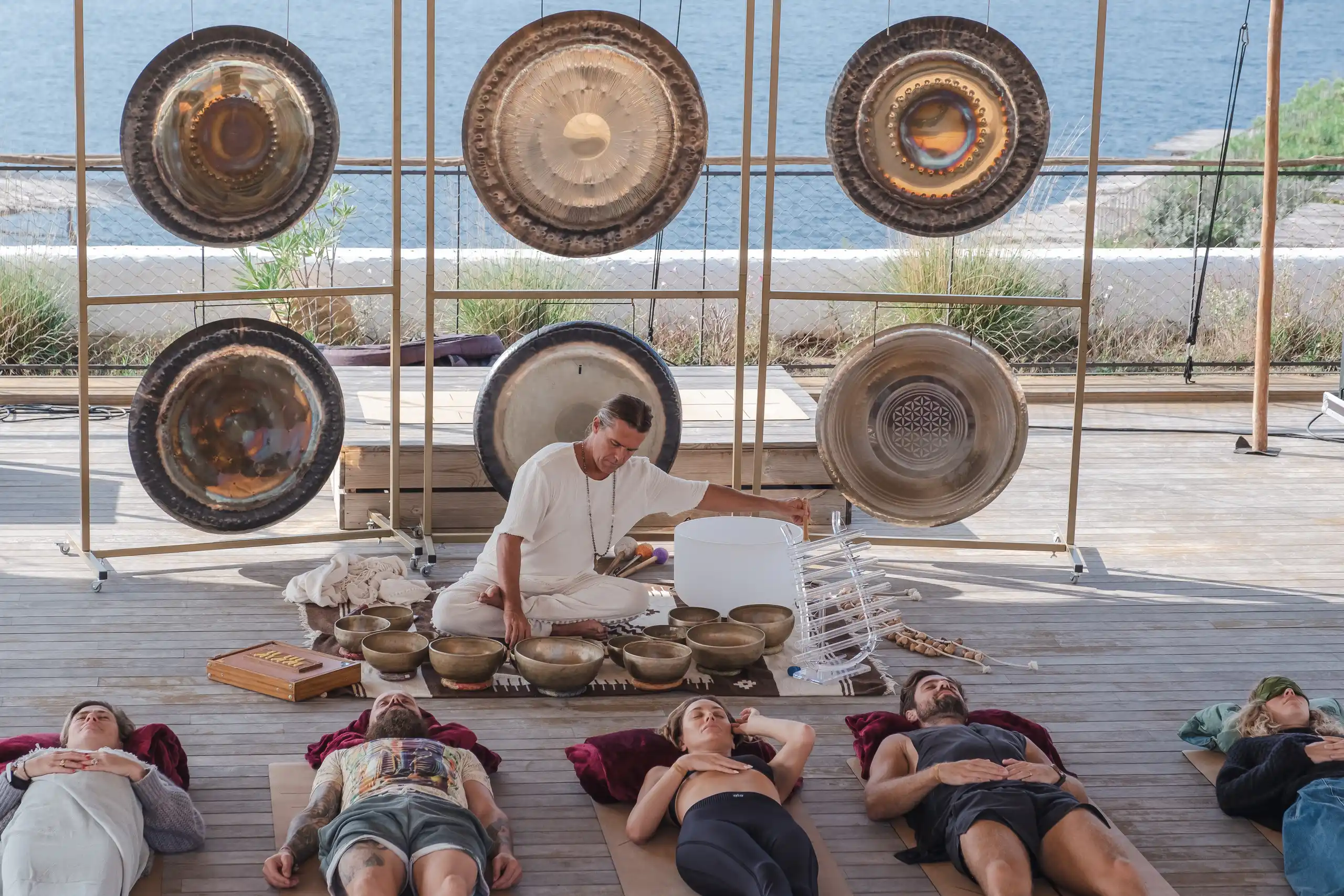
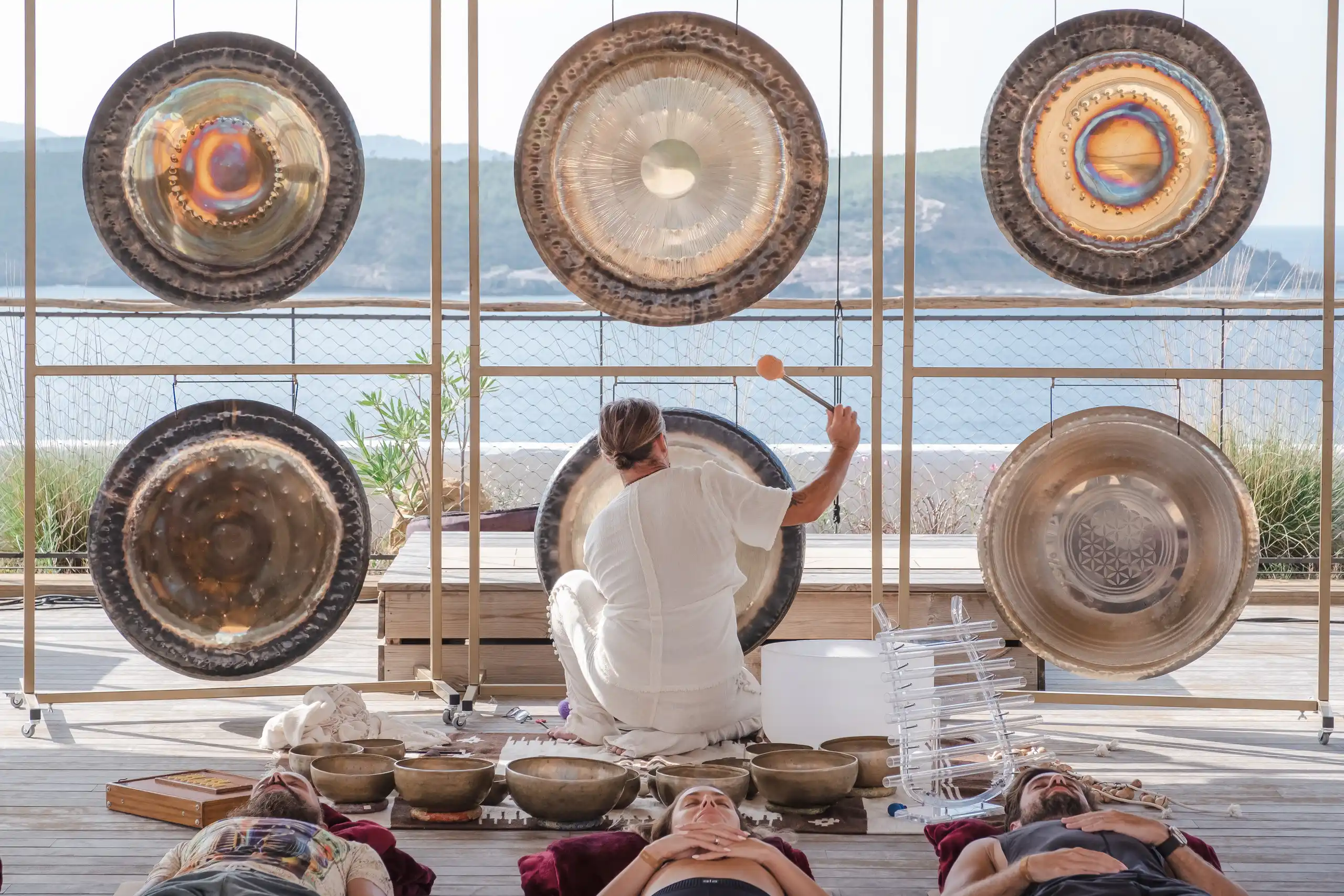
I felt connected to the animal, connected to the tones it was creating, connected to the breathing and the rhythm of it all. It was deeply embodied. Afterwards, a friend suggested I attend a sound ceremony. Five hours of intentional sound work using gongs and bowls. That experience changed something in me.
I began exploring mushrooms every few months, not recreationally but as a way of investigating consciousness. And from there, a whole new relationship with sound began to emerge.
ANÍMA:
Throughout human history, music has been woven into rites of passage, healing practices and communal gatherings. Do you feel we’re returning to something ancient rather than creating something new? And why do you think ritual and ceremony feel so relevant right now?
Michael Milosh:
I think we experience time as linear, but I’m not convinced that’s how time actually works.
There are things we remember collectively. Some of it is cultural, some biological and some connected to consciousness itself. I think music has always been one of the ways humans organise experience.
Historically, music and ritual were used to organise society. Music became a tool for transmitting values, creating cohesion and building identity, particularly within religion. But there’s another function of music that exists outside organised religion entirely. It’s a way of accessing what I would call a greater field of consciousness.
I don’t think one is right and the other is wrong. They’re simply different applications.
I don’t think one is right and the other is wrong. They’re simply different applications.
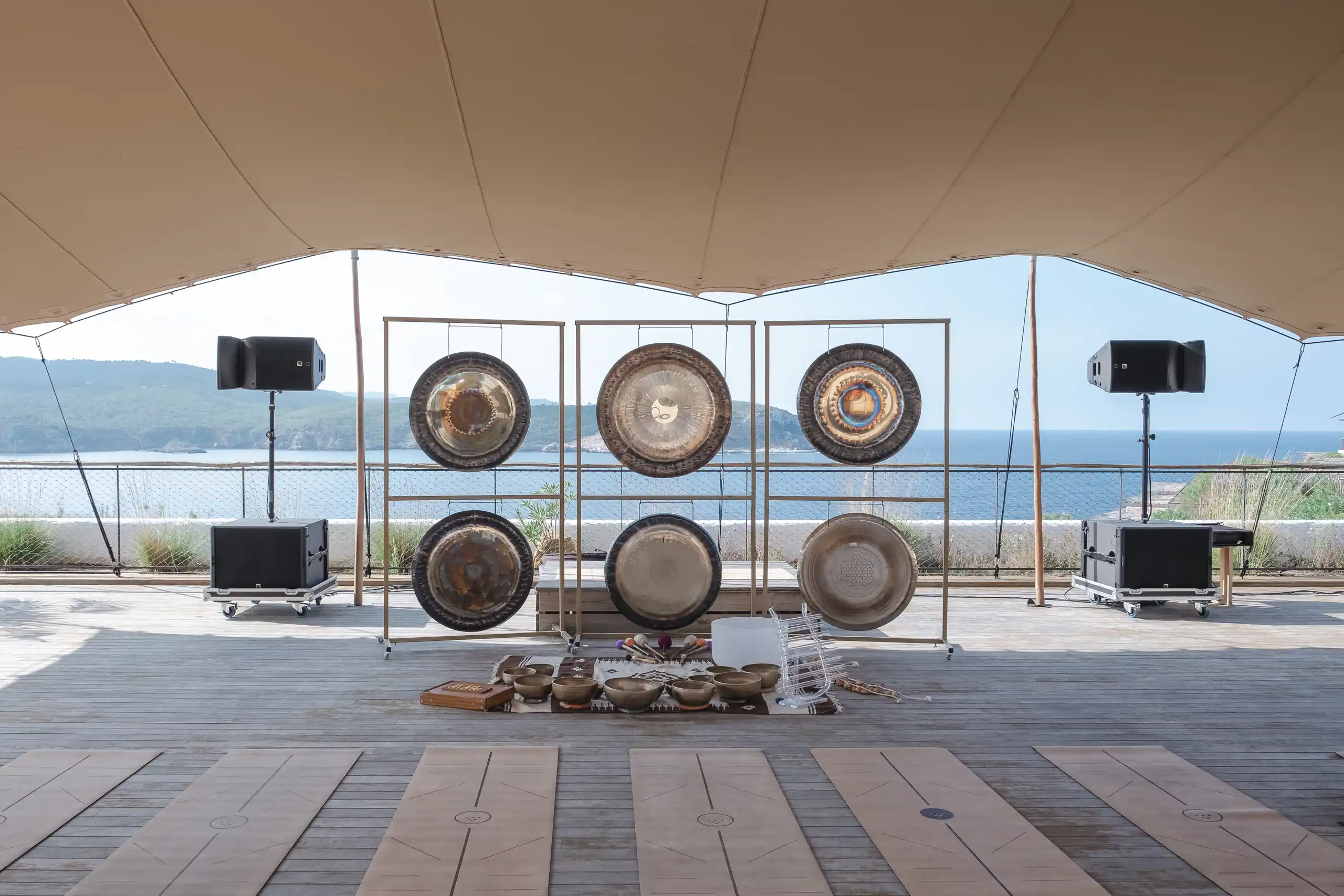
What interests me is the meeting point between the ancient and the future. That’s why I’m equally happy playing a three-hundred-year-old Nepalese bowl and a synthesiser. I don’t see those things as opposites.
Technology itself isn’t the problem. It’s how it’s used. Sound remains a living language. We’re not going backwards. We’re remembering while simultaneously moving forwards.

ANÍMA:
When you create one of these immersive sound experiences, what are you hoping people leave with?
Michael Milosh:
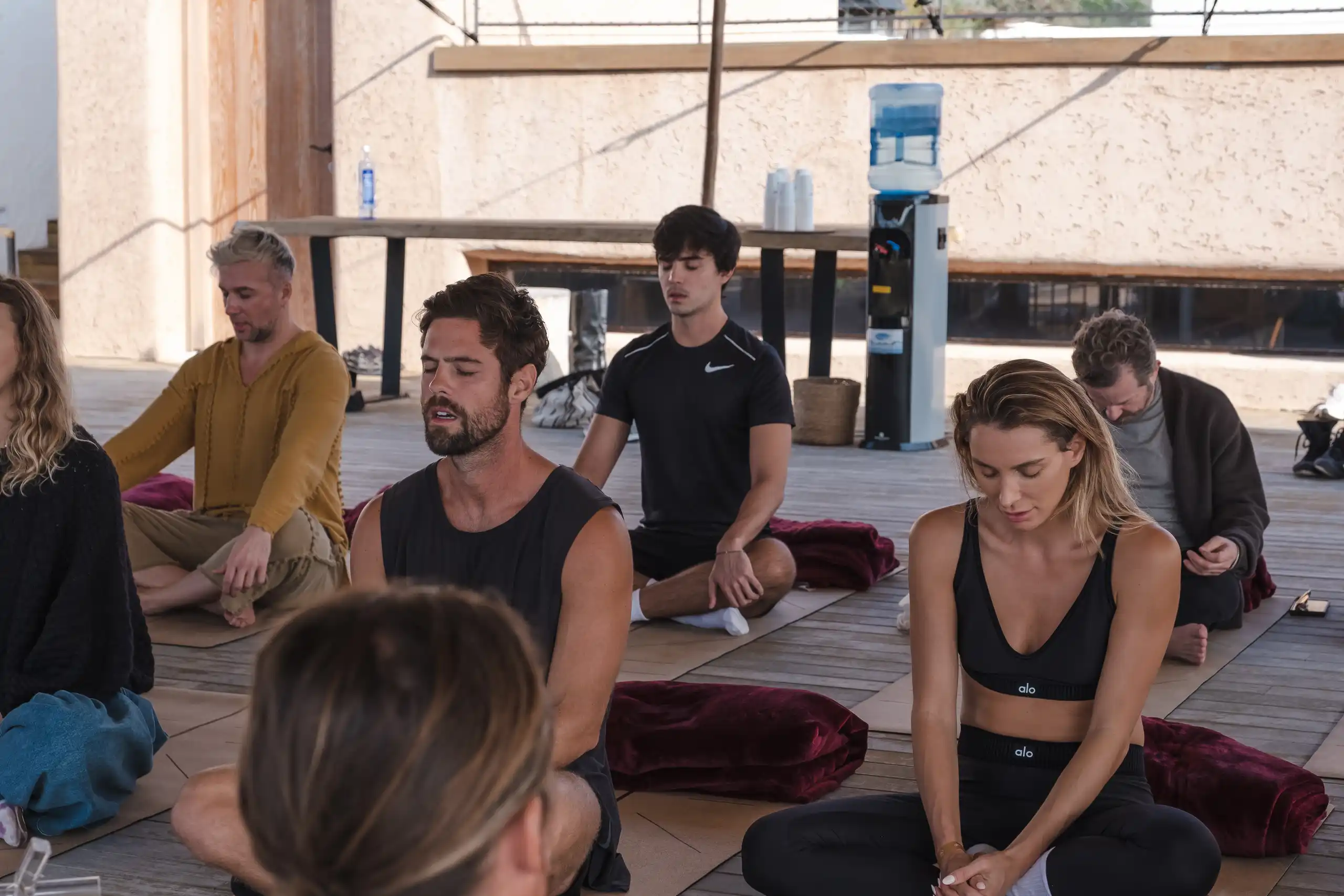
Honestly, I don’t try to direct people towards a particular outcome. I’m not trying to fit someone into my experience. I’m trying to accompany their experience.
What I try to create is an environment where people feel safe enough to go wherever they need to go. Once that happens, the journey becomes their own.
One person may be healing a difficult relationship with a parent. Someone else may be arriving at an important decision about their future. Another person might experience something entirely cosmic. People have very different experiences.
I don’t use spoken language during these journeys because language immediately starts shaping interpretation. I want people to encounter themselves directly. The role of the sound is simply to create conditions where that becomes possible.
ANÍMA:
You’ve spoken about exploring altered states of consciousness. What have those experiences taught you about listening, creativity and the human mind?
Michael Milosh:
Actually, one of the most profound experiences of my life happened inside the King’s Chamber of the Great Pyramid in Giza.
I wasn’t even using psychedelics at the time. I was simply singing. As I held these long notes, I began experiencing what felt like information emerging from the granite itself.
It’s difficult to describe without sounding completely insane, but it felt as though the frequencies were interacting with the structure in a way that revealed something. It felt like information was being pulled from very specific parts of the stone.
That experience completely changed how I think about sound.
That experience completely changed how I think about sound.
Since then, I’ve become fascinated by the idea that voice carries information. Not just emotion or melody, but information itself. I began developing long-form sound protocols using voice, synthesisers, movement and resonance. Everything is improvised. Nothing is pre-planned.
I’m fascinated by frequency and the way frequencies interact with one another. Certain combinations seem capable of creating patterns inside consciousness. Some people encounter geometric forms during psychedelic experiences. Sacred geometry, repeating structures, patterns. I think sound can communicate in a similar way.
It’s difficult to explain intellectually. I just know it when it’s happening.
It’s difficult to explain intellectually. I just know it when it’s happening.
Rhye Summer Solstice Sounds
Listen here:
ANÍMA:
Have you witnessed moments during these journeys where you’ve known somebody was moving through something profound?
Michael Milosh:
Absolutely. People cry all the time.
One of the most important things I’ve learned is not to interrupt the process. We’ve become uncomfortable with emotion and our instinct is often to stop it or fix it.
But if somebody is crying, they should cry.
I never touch people during a journey. Nobody touches anyone else. It’s important that the experience belongs entirely to them.
What I’ve learned is that when people are given permission to fully experience what’s happening, something remarkable often unfolds. Not because I’m doing something to them. Because they’re finally listening to themselves.
ANÍMA:
Ibiza has long been a place where music, freedom, spirituality and community intersect. What drew you to the island?
Michael Milosh:
To be honest, I mostly knew Ibiza through its reputation for club culture.
Then people started telling me there was this entirely different side to the island. The nature, the spirituality, the community. I found that really interesting.
Around the same time I started feeling like I was supposed to go there. Then Maddalen Pasini from YAWN reached out and invited me to bring one of these experiences to Ibiza.
I just felt compelled to go. I had a lot of yes energy around it. When the invitation came, it felt right.
ANÍMA:
In a world that often feels increasingly disconnected and digitised, why do you think people continue to seek out these communal experiences?
Michael Milosh:
We live in a strange moment. Technology can be incredibly distracting, but it can also help people find each other.
People are finding communities, teachers and experiences they may never otherwise have encountered.
I think there’s a growing number of people who are becoming more intentional about how they live, what they consume and who they spend time with. They want experiences that feel real.
That’s what I think people are searching for. Something genuine. Something that can’t be consumed through a screen.
It also excites me is that not every experience has to involve psychedelics. We do deep medicine journeys, but we also do two-hour sound baths every Sunday here in LA that don’t involve any substances at all.
Not every journey requires medicine.
ANÍMA:
Do you have any personal rituals that help you access creativity and presence?
Michael Milosh:
I like to start the day with a small tea ceremony. No talking. Just tea.
After that, I sit at the piano for about forty-five minutes. There’s no goal. No song. No agenda. I simply play.
Whatever is in my mind gets translated into sound. By the time I’m finished, everything feels quieter. Then I have breakfast and start working.
My studio is set up so that my phone doesn’t really have a place in the process. There’s no Wi-Fi there. I try to create an environment where I can focus completely on what I’m doing.
ANÍMA:
Looking back on your journey so far, what has music taught you about being human?
Michael Milosh:
That people want to connect with each other.
Music is one of the best vehicles we have for connection.
Music is one of the best vehicles we have for connection.
When I walk into a cathedral, it’s not necessarily the doctrine that moves me. It’s the choir. It’s the acoustics. It’s the collective experience of sound.
Music brings people together. It helps people move through emotion. Some people call that healing. I think of it more as returning to yourself.
I’ve dedicated my life to that experience because I need it too.
ANÍMA:
Finally, what do you know now that a younger Michael Milosh could never have understood?
Michael Milosh:
Life throws you insane hurdles. When you’re younger, you spend a lot of energy worrying about them. What I’ve learned is that you just have to keep going. It’s an endurance race. You jump the hurdle and you keep moving.
Somehow, things tend to work themselves out.
By Maya Boyd
For Michael Milosh, the singer, musician and producer behind Rhye, that intersection of sound, consciousness and collective experience has become an increasingly important part of his work. Over the past decade, Milosh has quietly evolved from creating intimate records into designing immersive sound journeys that sit somewhere between concert, meditation and ritual. Ahead of his first visit to Ibiza to perform with Kassia as a guest of YAWN, he speaks to ANÍMA about mushrooms, music as a carrier of information, the future of ceremony and why he believes sound remains one of humanity’s most powerful tools for connection.
ANÍMA:
Your work seems to have evolved from making music into creating something much more immersive. Whether it’s a concert, a sound journey or a communal gathering, there always seems to be an element of ritual, ceremony and shared experience. Was there a particular moment when you realised that music could become something bigger than performance?
Michael Milosh:
There was a very specific moment, and it involved psychedelics. Music has been part of my life since I was three years old. My father was a musician. My entire life has been associated with music in one way or another. Then during Covid, everything felt upside down. My father was very ill and eventually passed away. The world had shut down. Everything felt strange and uncertain.
I was hiking on Catalina Island with some friends when one of them offered me a mushroom chocolate. I had never really been interested in drugs. I don’t smoke weed, I barely drink. But something about that moment made me think, well, life is already crazy, why not?
I took a small amount and ended up sitting in front of a wild buffalo for almost an hour.
I took a small amount and ended up sitting in front of a wild buffalo for almost an hour.
What fascinated me wasn’t the buffalo itself. It was the sound. The way it was chewing. The vibration moving through its jaw and skull. I became completely absorbed by the actual experience of listening. For the first time, I wasn’t hearing sound as music. I was hearing sound itself.
I felt connected to the animal, connected to the tones it was creating, connected to the breathing and the rhythm of it all. It was deeply embodied. Afterwards, a friend suggested I attend a sound ceremony. Five hours of intentional sound work using gongs and bowls. That experience changed something in me.
I began exploring mushrooms every few months, not recreationally but as a way of investigating consciousness. And from there, a whole new relationship with sound began to emerge.
ANÍMA:
Throughout human history, music has been woven into rites of passage, healing practices and communal gatherings. Do you feel we’re returning to something ancient rather than creating something new? And why do you think ritual and ceremony feel so relevant right now?
Michael Milosh:
I think we experience time as linear, but I’m not convinced that’s how time actually works.
There are things we remember collectively. Some of it is cultural, some biological and some connected to consciousness itself. I think music has always been one of the ways humans organise experience.
Historically, music and ritual were used to organise society. Music became a tool for transmitting values, creating cohesion and building identity, particularly within religion. But there’s another function of music that exists outside organised religion entirely. It’s a way of accessing what I would call a greater field of consciousness.
I don’t think one is right and the other is wrong. They’re simply different applications.
I don’t think one is right and the other is wrong. They’re simply different applications.
What interests me is the meeting point between the ancient and the future. That’s why I’m equally happy playing a three-hundred-year-old Nepalese bowl and a synthesiser. I don’t see those things as opposites.
Technology itself isn’t the problem. It’s how it’s used. Sound remains a living language. We’re not going backwards. We’re remembering while simultaneously moving forwards.
ANÍMA:
When you create one of these immersive sound experiences, what are you hoping people leave with?
Michael Milosh:
Honestly, I don’t try to direct people towards a particular outcome. I’m not trying to fit someone into my experience. I’m trying to accompany their experience.
What I try to create is an environment where people feel safe enough to go wherever they need to go. Once that happens, the journey becomes their own.
One person may be healing a difficult relationship with a parent. Someone else may be arriving at an important decision about their future. Another person might experience something entirely cosmic. People have very different experiences.
I don’t use spoken language during these journeys because language immediately starts shaping interpretation. I want people to encounter themselves directly. The role of the sound is simply to create conditions where that becomes possible.
ANÍMA:
You’ve spoken about exploring altered states of consciousness. What have those experiences taught you about listening, creativity and the human mind?
Michael Milosh:
Actually, one of the most profound experiences of my life happened inside the King’s Chamber of the Great Pyramid in Giza.
I wasn’t even using psychedelics at the time. I was simply singing. As I held these long notes, I began experiencing what felt like information emerging from the granite itself.
It’s difficult to describe without sounding completely insane, but it felt as though the frequencies were interacting with the structure in a way that revealed something. It felt like information was being pulled from very specific parts of the stone.
That experience completely changed how I think about sound.
That experience completely changed how I think about sound.
Since then, I’ve become fascinated by the idea that voice carries information. Not just emotion or melody, but information itself. I began developing long-form sound protocols using voice, synthesisers, movement and resonance. Everything is improvised. Nothing is pre-planned.
I’m fascinated by frequency and the way frequencies interact with one another. Certain combinations seem capable of creating patterns inside consciousness. Some people encounter geometric forms during psychedelic experiences. Sacred geometry, repeating structures, patterns. I think sound can communicate in a similar way.
It’s difficult to explain intellectually. I just know it when it’s happening.
It’s difficult to explain intellectually. I just know it when it’s happening.
Rhye Summer Solstice Sounds
Listen here:
ANÍMA:
Have you witnessed moments during these journeys where you’ve known somebody was moving through something profound?
Michael Milosh:
Absolutely. People cry all the time.
One of the most important things I’ve learned is not to interrupt the process. We’ve become uncomfortable with emotion and our instinct is often to stop it or fix it.
But if somebody is crying, they should cry.
I never touch people during a journey. Nobody touches anyone else. It’s important that the experience belongs entirely to them.
What I’ve learned is that when people are given permission to fully experience what’s happening, something remarkable often unfolds. Not because I’m doing something to them. Because they’re finally listening to themselves.
ANÍMA:
Ibiza has long been a place where music, freedom, spirituality and community intersect. What drew you to the island?
Michael Milosh:
To be honest, I mostly knew Ibiza through its reputation for club culture.
Then people started telling me there was this entirely different side to the island. The nature, the spirituality, the community. I found that really interesting.
Around the same time I started feeling like I was supposed to go there. Then Maddalen Pasini from YAWN reached out and invited me to bring one of these experiences to Ibiza.
I just felt compelled to go. I had a lot of yes energy around it. When the invitation came, it felt right.
ANÍMA:
In a world that often feels increasingly disconnected and digitised, why do you think people continue to seek out these communal experiences?
Michael Milosh:
We live in a strange moment. Technology can be incredibly distracting, but it can also help people find each other.
People are finding communities, teachers and experiences they may never otherwise have encountered.
I think there’s a growing number of people who are becoming more intentional about how they live, what they consume and who they spend time with. They want experiences that feel real.
That’s what I think people are searching for. Something genuine. Something that can’t be consumed through a screen.
It also excites me is that not every experience has to involve psychedelics. We do deep medicine journeys, but we also do two-hour sound baths every Sunday here in LA that don’t involve any substances at all.
Not every journey requires medicine.
ANÍMA:
Do you have any personal rituals that help you access creativity and presence?
Michael Milosh:
I like to start the day with a small tea ceremony. No talking. Just tea.
After that, I sit at the piano for about forty-five minutes. There’s no goal. No song. No agenda. I simply play.
Whatever is in my mind gets translated into sound. By the time I’m finished, everything feels quieter. Then I have breakfast and start working.
My studio is set up so that my phone doesn’t really have a place in the process. There’s no Wi-Fi there. I try to create an environment where I can focus completely on what I’m doing.
ANÍMA:
Looking back on your journey so far, what has music taught you about being human?
Michael Milosh:
That people want to connect with each other.
Music is one of the best vehicles we have for connection.
Music is one of the best vehicles we have for connection.
When I walk into a cathedral, it’s not necessarily the doctrine that moves me. It’s the choir. It’s the acoustics. It’s the collective experience of sound.
Music brings people together. It helps people move through emotion. Some people call that healing. I think of it more as returning to yourself.
I’ve dedicated my life to that experience because I need it too.
ANÍMA:
Finally, what do you know now that a younger Michael Milosh could never have understood?
Michael Milosh:
Life throws you insane hurdles. When you’re younger, you spend a lot of energy worrying about them. What I’ve learned is that you just have to keep going. It’s an endurance race. You jump the hurdle and you keep moving.
Somehow, things tend to work themselves out.
DON’T MISS