Back to the Land: Johnnie Collins
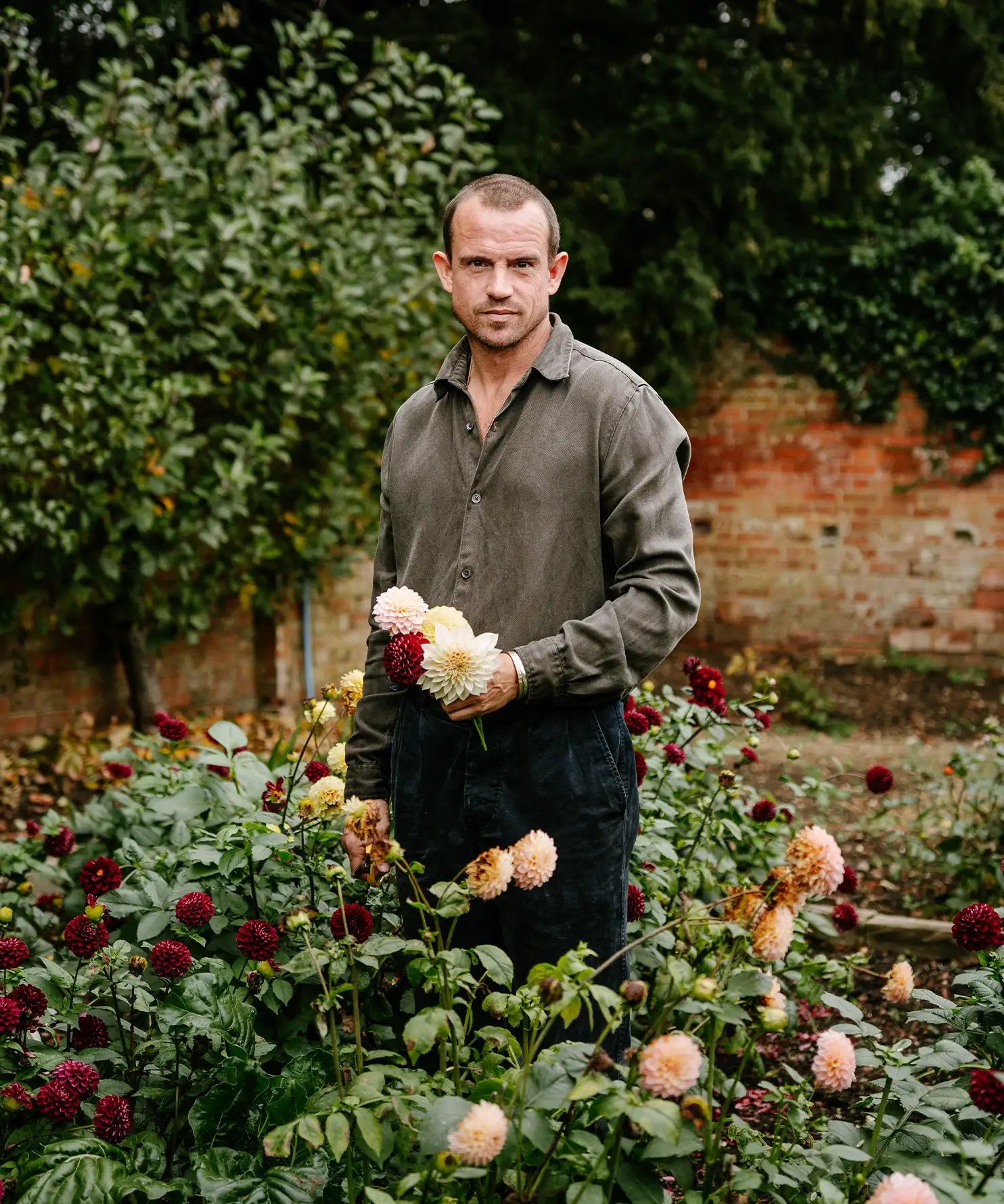
He’s cooked for Hermès , Jo Malone London and the Venice Biennale, but Johnnie Collins still prefers getting his hands dirty. ANÍMA meets the London-based chef and grower who’s quietly reframing the nature of provenance.
JOIN THE RITUAL. SIGN UP FOR EXCLUSIVE CONTENT, EXPERT INSIGHTS,
RITUALS, STORIES, NEW LAUNCHES & EXPERIENCES
By Maya Boyd
“I grew up in the English countryside in a household where food was central but never precious,” recalls Collins. “The house was always full of people; the table always packed with produce my mother had grown.” His mother, Angel Collins, is a legendary garden designer. His father was a wine merchant. Between them, he absorbed two disciplines early on. One rooted in land and patience. The other in flavour and judgement. “I grew up obsessed with where things come from,” he says. “That was always the thing for me.”
He started cooking young, feeding friends and family instinctively, then moved into professional kitchens in his early twenties. He is self-taught and has now spent over fifteen years cooking at a high level, leading kitchens, opening restaurants and producing food for demanding clients across hospitality, fashion and culture. Throughout it all, origin has remained the constant. “The thing I really love about cooking is knowing where food comes from,” he says. “Not just using ingredients but actually understanding them.”
“I grew up obsessed with where things come from,” he says. “That was always the thing for me.”
“I grew up obsessed with where things come from,” he says. “That was always the thing for me.”
That curiosity sharpened during the pandemic. With restaurants closed and time suddenly available, Collins built an extensive vegetable garden from scratch. Everything was grown from seed. No chemicals. No pesticides. No fertilisers. “I wouldn’t even call it organic,” he says. “It’s so far beyond that. It’s regenerative. It’s about looking after the soil first.”
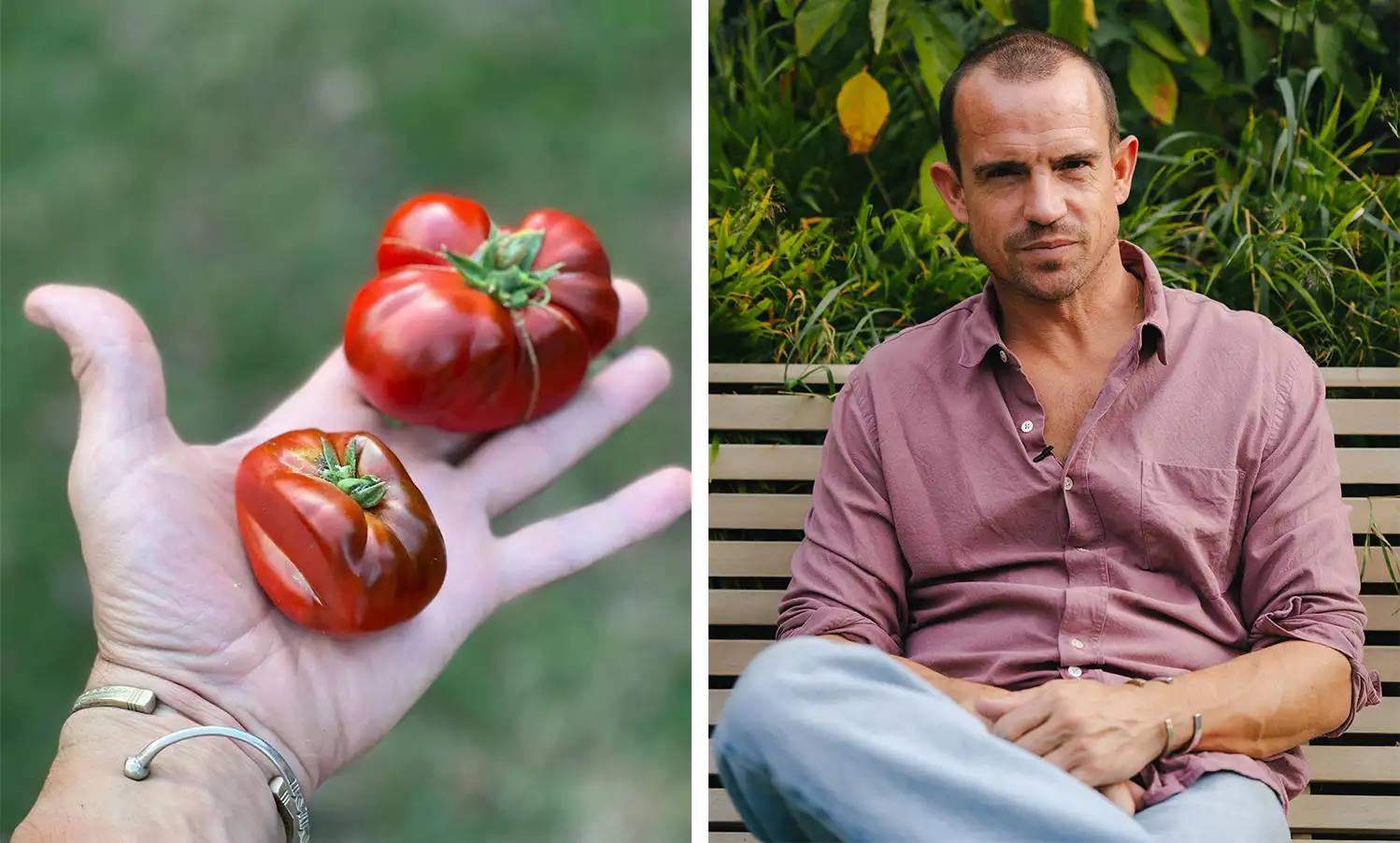
Spending every day growing food shifted his relationship with cooking and with health. “If the soil is alive, the food is alive,” he says. “And if the food is alive, you feel it when you eat it. If I eat a tomato I’ve picked that morning, it’s still got the life in it.”
That physical connection between soil and plate is central to his work. When Collins was hired by fashion and pop-culture supremo Alex Eagle for her Oakley Court hotel, he was tasked to design, plant and manage the hotel’s market gardens. He created large-scale growing spaces that fed directly into the kitchen, shaping menus around what was ready rather than what was expected.
“It was a completely different rhythm,” he says. “You’re in the greenhouse every morning, hands in the soil, then you’re serving something you’ve grown yourself. That changes how you cook. It changes how you think.”
“If I eat a tomato I’ve picked that morning, it’s still got the life in it.”
“If I eat a tomato I’ve picked that morning, it’s still got the life in it.”
Alongside this deeply grounded approach, Collins has built a parallel career working at the sharp end of fashion, art and design. He’s cooked for brands including Nanushka, Wales Bonner, Adidas, Nike, Dunhill and Soho House. He’s produced food for London Fashion Week, the Venice Biennale and major international events, as well as private houses and cultural institutions.
Despite the scale and polish of those environments, his food remains authentic. “It’s about flavour and generosity,” he says. “I’m not interested in doing things in a super flashy way. People trust the food if it’s honest.”
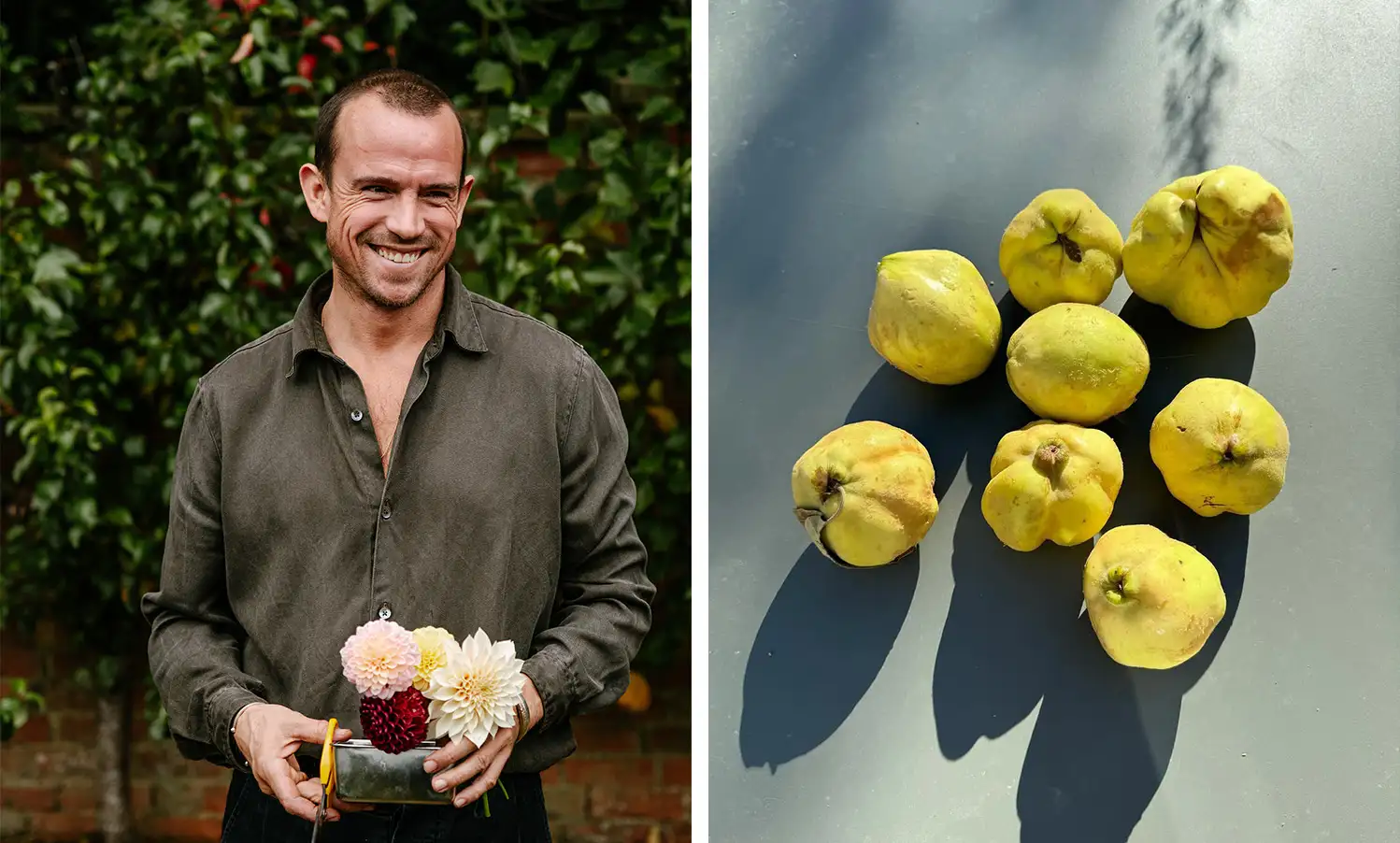
In recent years, Collins’ focus has shifted again. He has completed his master’s in landscape design and now creates regenerative kitchen gardens for private clients, hotels and long-term projects. “I realised I wanted to understand how to build these spaces properly,” he says. “Not just to plant, but design places where food and beauty can truly co-exist. If something’s grown well, in the right environment, you don’t need to do much to it. You just need to listen.”
By Maya Boyd
“I grew up in the English countryside in a household where food was central but never precious,” recalls Collins. “The house was always full of people; the table always packed with produce my mother had grown.” His mother, Angel Collins, is a legendary garden designer. His father was a wine merchant. Between them, he absorbed two disciplines early on. One rooted in land and patience. The other in flavour and judgement. “I grew up obsessed with where things come from,” he says. “That was always the thing for me.”
He started cooking young, feeding friends and family instinctively, then moved into professional kitchens in his early twenties. He is self-taught and has now spent over fifteen years cooking at a high level, leading kitchens, opening restaurants and producing food for demanding clients across hospitality, fashion and culture. Throughout it all, origin has remained the constant. “The thing I really love about cooking is knowing where food comes from,” he says. “Not just using ingredients but actually understanding them.”
“I grew up obsessed with where things come from,” he says. “That was always the thing for me.”
“I grew up obsessed with where things come from,” he says. “That was always the thing for me.”
That curiosity sharpened during the pandemic. With restaurants closed and time suddenly available, Collins built an extensive vegetable garden from scratch. Everything was grown from seed. No chemicals. No pesticides. No fertilisers. “I wouldn’t even call it organic,” he says. “It’s so far beyond that. It’s regenerative. It’s about looking after the soil first.”
Spending every day growing food shifted his relationship with cooking and with health. “If the soil is alive, the food is alive,” he says. “And if the food is alive, you feel it when you eat it. If I eat a tomato I’ve picked that morning, it’s still got the life in it.”
That physical connection between soil and plate is central to his work. When Collins was hired by fashion and pop-culture supremo Alex Eagle for her Oakley Court hotel, he was tasked to design, plant and manage the hotel’s market gardens. He created large-scale growing spaces that fed directly into the kitchen, shaping menus around what was ready rather than what was expected.
“It was a completely different rhythm,” he says. “You’re in the greenhouse every morning, hands in the soil, then you’re serving something you’ve grown yourself. That changes how you cook. It changes how you think.”
“If I eat a tomato I’ve picked that morning, it’s still got the life in it.”
“If I eat a tomato I’ve picked that morning, it’s still got the life in it.”
Alongside this deeply grounded approach, Collins has built a parallel career working at the sharp end of fashion, art and design. He’s cooked for brands including Nanushka, Wales Bonner, Adidas, Nike, Dunhill and Soho House. He’s produced food for London Fashion Week, the Venice Biennale and major international events, as well as private houses and cultural institutions.
Despite the scale and polish of those environments, his food remains authentic. “It’s about flavour and generosity,” he says. “I’m not interested in doing things in a super flashy way. People trust the food if it’s honest.”
In recent years, Collins’ focus has shifted again. He has completed his master’s in landscape design and now creates regenerative kitchen gardens for private clients, hotels and long-term projects. “I realised I wanted to understand how to build these spaces properly,” he says. “Not just to plant, but design places where food and beauty can truly co-exist. If something’s grown well, in the right environment, you don’t need to do much to it. You just need to listen.”
DON’T MISS